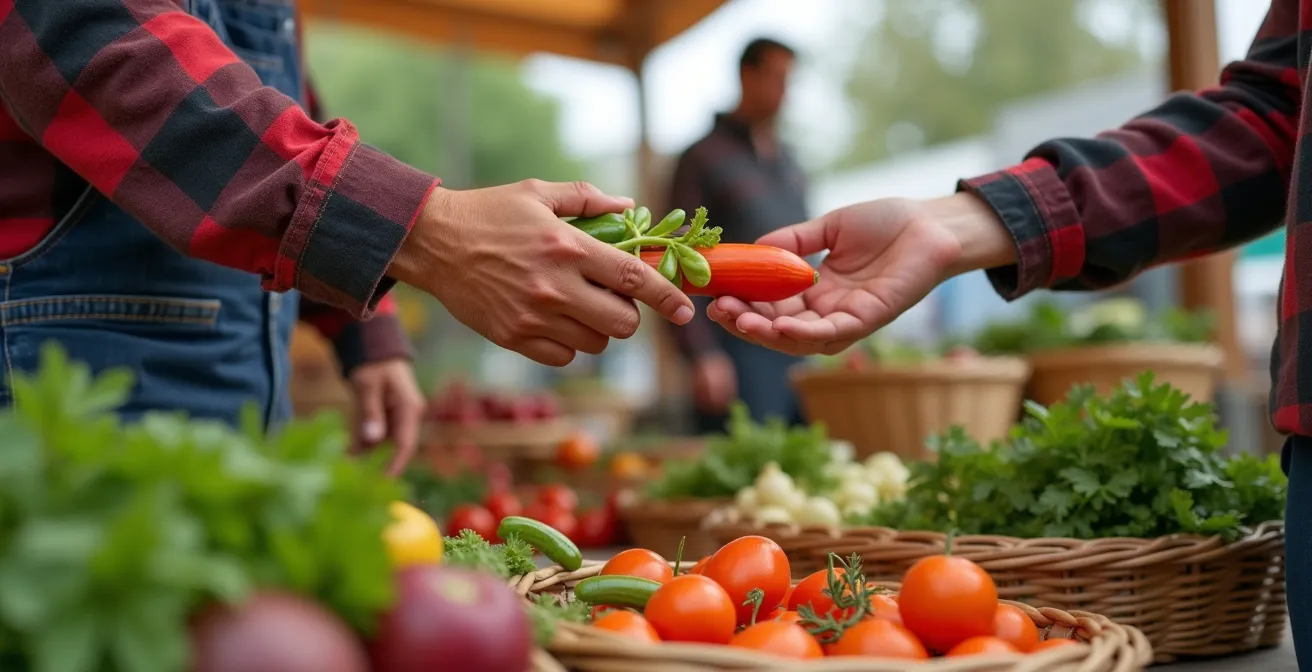
The exceptional flavor and nutrition you’re searching for isn’t just about buying “organic” or “local”—it’s about understanding and bypassing the time-sensitive decay built into the conventional food system.
- Most produce loses a significant percentage of its key nutrients, like vitamin C and folate, within days or even hours of being harvested.
- True quality is often found in “spray-free” farms that may not be certified organic but have superior soil health and biodiversity, which you can uncover through conversation.
Recommendation: Your journey to better food starts not with a label, but with a question. Start by visiting a local farmers’ market and engaging one farmer about their practices.
It’s a story every food lover knows: you buy a beautiful, ruby-red tomato from the supermarket, a perfect specimen. You bring it home, slice it open with anticipation, and find… nothing. The texture is mealy, the flavor is a ghost of what it should be. This disappointment is the quiet symptom of a much larger problem. We’ve become disconnected from our food source, and in that distance, we’ve lost the very qualities we seek: vitality, flavor, and true nutritional value. The common advice is to “shop local” or “go to a farmers’ market,” and while that’s a start, it barely scratches the surface.
The conventional wisdom about local food often misses the most critical point. The key to unlocking truly superior ingredients isn’t just about reducing food miles or finding a quaint farm stand. It’s about mastering the hidden science of food quality. It’s about understanding the “nutrient clock” that starts ticking the moment a vegetable is picked, the complex carbon trade-offs of food distribution, and the simple mistakes that can destroy flavor in your own kitchen. Building a direct relationship with farmers isn’t a nostalgic ideal; it is a strategic act of sourcing intelligence.
This guide will equip you with that intelligence. We will move beyond the platitudes and dive into the science of freshness and the art of connection. You will learn why your spinach is losing its power, how to spot an exceptional farm that operates beyond labels, and how to plan your meals to harness the full potential of your ingredients. It’s time to stop being a passive consumer and become a true partner in your food’s journey from the soil to your plate.
To guide you on this path, this article breaks down the essential knowledge and actionable steps you need. We’ll explore the science, the sourcing strategies, and the practical application of building a meaningful connection with the people who grow your food.
Summary: Beyond the Supermarket: A Guide to Sourcing Directly from Farmers
- Why Does Spinach Lose 50% of Its Nutrients Within 7 Days of Harvest?
- How to Spot “Spray-Free” Produce That Isn’t Certified Organic But Is Better?
- Supermarket Organic vs Local Conventional: Which Is Lower Carbon?
- The Fridge Mistake That Makes Your Organic Tomatoes Tasteless
- When Is the Exact Week to Buy Strawberries for Maximum Sweetness?
- How to Find Local Mentors Who Unlock Doors Closed to Tourists?
- The “Healthy” Salad Mistake That Leaves You Deficient in Protein and Fat
- How to Plan Weekly Meals to Eliminate the “Afternoon Crash” Completely?
Why Does Spinach Lose 50% of Its Nutrients Within 7 Days of Harvest?
The moment a plant is harvested, a “nutrient clock” begins to tick. Severed from its life source—the sun, soil, and water—it enters a state of rapid degradation. This is not a slow, gentle process; it’s an aggressive decline. Spinach is a prime example of this phenomenon. University of California studies have revealed a shocking reality about its fragility: some spinach can lose 90% of its vitamin C within the first 24 hours post-harvest. This means the “fresh” spinach in your supermarket, which has likely traveled for days and sat on a shelf, is a pale shadow of its nutritional potential.
The loss extends beyond vitamin C. Researchers at Penn State dug deeper, focusing on folate, another crucial B vitamin. Their work, detailed in a study on commercially packaged spinach, found that even under ideal refrigeration at 39°F (4°C), the spinach retained only 53% of its folate after eight days. The situation worsens dramatically as the temperature rises. When stored at a common room temperature of 68°F (20°C), the spinach experienced the same nutrient loss in just four days. This demonstrates that the entire supply chain—from harvest to transport to store to your home—is a race against this invisible clock.
To fight this nutrient decline, you must shorten the time from farm to fork. Here are the most effective strategies:
- Buy Direct and Fast: Purchase produce from farmers’ markets, ideally within 24 hours of harvest.
- Master Cold Storage: Store leafy greens at a consistent 39°F (4°C) in a high-humidity crisper drawer.
- Embrace the Dark: Keep produce in dark storage to prevent light from oxidizing delicate phytonutrients.
- Seek Living Produce: Whenever possible, buy produce with roots still attached (like living lettuce or herbs) to keep the nutrient clock paused.
Ultimately, the freshest, most nutritious food is not the one with the shiniest packaging, but the one that has traveled the shortest distance in the shortest amount of time.
How to Spot “Spray-Free” Produce That Isn’t Certified Organic But Is Better?
The “USDA Organic” label is a useful starting point, but it’s not the final word on quality. The certification process is expensive and bureaucratic, often leaving smaller, passionate farmers who use exceptional, sustainable methods unable to afford it. These are the “spray-free” artisans whose practices often exceed organic standards. The key to finding them is not to look for a label, but to look for a thriving farm ecosystem. A healthy farm buzzes with life—beneficial insects, wildflower borders, and rich, dark soil are better indicators of quality than a sticker.
Finding these farmers requires you to become an investigator and a connector. You must learn to read the signs of a healthy farm and, more importantly, learn to talk to the person who stewards the land. A farmer who is passionate about soil health and biodiversity will be excited to share their philosophy. Their answers will reveal a depth of care that no certification can fully capture. This is where you move from being a consumer to being a collaborator in a healthier food system.
Your Action Plan: Conversation Starters for the Farmers’ Market
- Ask about their philosophy: “I know organic certification is expensive for smaller farms. Could you tell me about your philosophy on soil health and pest management?”
- Inquire about fertility: “What cover crops do you use to maintain soil fertility between seasons?”
- Question their methods: “Do you practice crop rotation, and how does that benefit your produce quality?”
- Engage with the ecosystem: “I notice you have wildflower borders—how do they help with natural pest control?”
- Connect with their story: “How long have you been farming this land, and what changes have you observed in soil health?”
When you start asking these questions, you’re no longer just buying a carrot; you’re investing in a philosophy of farming that prioritizes health and flavor above all else.
Supermarket Organic vs Local Conventional: Which Is Lower Carbon?
The assumption that “local” automatically means “low-carbon” is one of the biggest myths in sustainable eating. While intuitively appealing, the concept of “food miles” is often a misleading metric. The surprising truth is that how food is produced matters far more than how far it travels. In fact, for most food products, transport accounts for less than 10% of the total carbon footprint. The vast majority of emissions come from land use change and the farming process itself—fertilizers, machinery, and methane from livestock.
This creates a complex series of trade-offs. A large-scale organic farm in another state or country might have a lower carbon footprint per item than a small, local conventional farm due to economies of scale in processing and transport. However, the equation changes again based on your own behavior. Groundbreaking research on UK organic produce found a startling tipping point: if a customer drives more than a 4.2-mile (6.7km) roundtrip to buy from a local farm shop, their personal car emissions can easily exceed all the emissions from the large-scale supplier’s entire cold storage, packing, and home delivery system. This highlights the importance of sourcing intelligence.
The goal isn’t to blindly follow a single rule like “buy local.” It’s about making a more informed choice. A local farmer using regenerative, no-till practices is likely a fantastic choice, even if they aren’t certified organic. A local product you can walk or bike to is almost always a win. The most powerful strategy is to reduce consumption of high-impact foods like red meat and dairy, which dwarf the emissions from even the most long-distance vegetables.
Ultimately, a lower-carbon diet is less about geography and more about a conscious evaluation of production methods and personal habits.
The Fridge Mistake That Makes Your Organic Tomatoes Tasteless
You’ve done the work. You’ve found a local farmer, bought their beautiful, sun-ripened organic tomatoes, and brought them home. And then, you make the single most common mistake: you put them in the refrigerator. This seemingly innocent act of preservation is, in reality, an act of flavor destruction. The cold doesn’t just pause the ripening process; it actively and permanently damages the very mechanisms that create a tomato’s complex taste and aroma.
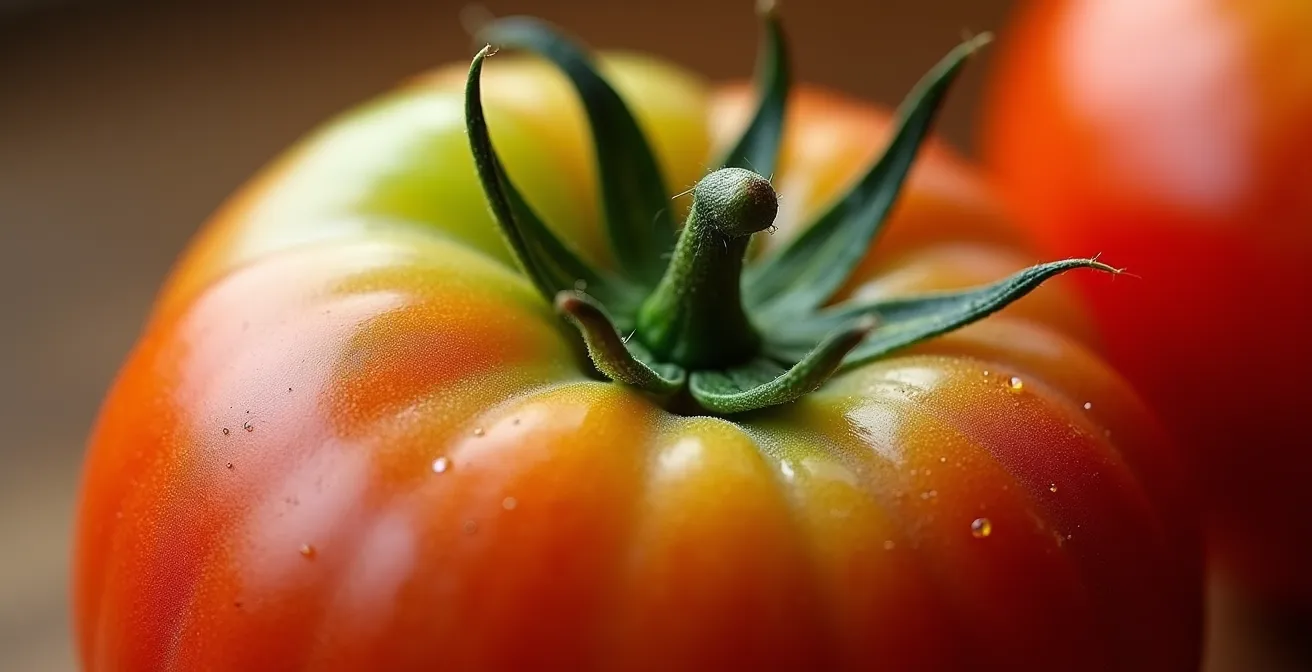
The science is clear and unforgiving. Research published in the prestigious journal PNAS shows that storing tomatoes below 12°C (54°F) triggers a process called “chilling injury.” This cold shock alters the genetic activity within the fruit, shutting down the enzymes responsible for synthesizing volatile organic compounds. These volatiles are the source of a tomato’s signature aroma and a huge component of its flavor. Even if you bring the chilled tomato back to room temperature, those flavor-producing genes remain switched off. The damage is irreversible.
A truly flavorful tomato is a living, breathing fruit that is still developing its character after being picked. The ideal storage is on your kitchen counter, away from direct sunlight, with the stem-side down to prevent moisture loss. This allows it to continue its natural ripening process, developing the perfect balance of sweetness and acidity that the farmer worked so hard to cultivate. The refrigerator is for preservation, but for a tomato, it is a flavorless tomb. Cherish that delicate flavor chemistry by giving your farm-fresh tomatoes the respect they deserve.
By keeping them out of the cold, you honor the journey of the ingredient and ensure you experience the full, vibrant taste that nature intended.
When Is the Exact Week to Buy Strawberries for Maximum Sweetness?
Anyone who has tasted a truly sun-ripened strawberry knows it’s a world apart from the hard, watery versions found in supermarkets year-round. But even at a farmers’ market, not all strawberries are created equal. Timing is everything. The secret to finding the absolute sweetest berries lies not just in the season, but in the weather from the preceding week. Sugar content, measured in Brix, is a direct result of photosynthesis. The more sun a plant gets, the more sugar it produces.
As one expert notes, this direct link between weather and flavor is the ultimate insider tip. In the words of an Agricultural Extension Expert from the Growing Spaces Agricultural Guide:
The strawberries picked right after several warm, dry, sunny days will be significantly sweeter than those picked after a rainy or overcast week.
– Agricultural Extension Expert, Growing Spaces Agricultural Guide
This means you need to become a micro-forecaster for your local area. Pay attention to the weather patterns. A string of three to five sunny, warm days creates the perfect conditions for the plants to pump sugars into their fruit. Berries harvested just after this period will have the highest Brix content and the most intense, candy-like flavor. Conversely, berries picked after a stretch of rain will be larger and more plump with water, but their sugars will be diluted, resulting in a less impactful taste. Armed with this knowledge, you can time your market visit for peak sweetness.
Here’s how to apply this weather-based selection strategy:
- Monitor Local Weather: Look for a forecast with 3-5 consecutive sunny, warm days before you plan to buy.
- Ask About “High-Brix”: Ask the farmer if they have a specific patch known for its high sugar content.
- Look for Signs of Sun: Berries from plants at the end of rows often get more sun exposure and can be sweeter.
- Check for Deep Color: The red color should be deep and consistent all the way to the top, under the green cap.
This simple act of timing transforms strawberry buying from a game of chance into a predictable science of deliciousness.
How to Find Local Mentors Who Unlock Doors Closed to Tourists?
The deepest connection to local food culture isn’t found in a guidebook or a top-10 list; it’s found through people. Finding a “local mentor”—a farmer, a chef, or a passionate home cook—can unlock experiences and ingredients that are simply invisible to the average person. But these relationships aren’t transactional. You can’t just “find” a mentor. You must earn one. The most effective way is through the “give-first” principle: offering value before you ask for anything in return. This shifts the dynamic from a simple purchase to a genuine, two-way relationship.
This approach requires a commitment. It means becoming a regular at a farm stand, subscribing to a CSA (Community Supported Agriculture) box, or offering a skill you have. Are you a photographer? Offer to take photos for their social media. A web developer? Help them with their website. This act of generosity builds trust and shows you’re invested in their success, not just your own consumption. Over time, this consistent support and genuine interest will transform you from a customer into a member of their community.
Case Study: The “Give-First” Success of the MN Millennial Farmer
Zach Johnson, a fifth-generation Minnesota farmer, exemplifies this principle on a massive scale. By freely sharing his knowledge and the authentic daily realities of farming on YouTube, he built a community of over a million subscribers. He didn’t start by selling; he started by giving—offering transparency and engaging in genuine dialogue. This created a powerful two-way mentorship. His community learns the truth about food production, and in return, he gains invaluable insight into their concerns and desires. This demonstrates that building a relationship is about creating a circle of shared knowledge and mutual respect.
To start your own “give-first” journey, consider these practical steps:
- Commit to Regularity: Become a familiar face through weekly purchases.
- Offer Your Skills: Freely offer help in areas like photography, social media, or marketing.
- Promote Their Work: Share their story and products on your own social channels.
- Volunteer Your Time: Offer to help during a busy harvest season.
- Expand the Network: Ask them about their favorite local chefs and restaurants to build more connections.
When you give first, the doors that were once closed to tourists will open to you as a friend.
The “Healthy” Salad Mistake That Leaves You Deficient in Protein and Fat
With a bag full of vibrant, farm-fresh greens, it’s easy to fall into the “healthy salad” trap. You create a beautiful bowl of lettuce, cucumber, and tomatoes, top it with a light vinaigrette, and feel virtuous. The problem? This meal is nutritionally incomplete. A salad composed almost entirely of non-starchy vegetables provides fiber and micronutrients, but it critically lacks two of the most important macronutrients: protein and healthy fats. Without them, your “healthy” lunch is a recipe for an energy crash and lingering hunger an hour later.
Protein is essential for satiety—the feeling of fullness—and for maintaining muscle mass. Healthy fats are crucial for hormone production and, importantly, for the absorption of fat-soluble vitamins (A, D, E, and K) found in your greens. Without fat in your dressing or toppings, you are literally flushing many of your salad’s key vitamins out of your system. A truly healthy salad is a balanced meal, not just a pile of leaves.
The farmers’ market itself provides the perfect template for building a complete meal in a bowl. You’re already there for the greens; now, you just need to visit the other vendors. Think of it as a treasure hunt for macronutrients. This approach not only makes your salad more satisfying and nutritious but also supports a wider range of local producers. Here is your blueprint for a nutritionally complete farmers’ market salad:
- Start with a Base: Use the freshest seasonal greens you can find from a produce vendor.
- Add Powerful Protein: Look for a meat vendor selling leftover roast chicken or cured meats, or grab fresh farm eggs.
- Include Healthy Fats: Visit a local cheese maker for crumbles of feta or goat cheese, or a nut vendor for walnuts or pecans.
- Boost Gut Health: Incorporate fermented vegetables like sauerkraut or kimchi from a specialty vendor for a probiotic kick.
- Finish with Flavor: Use fresh herbs instead of processed dressings, and top with seeds for added crunch and minerals.
This isn’t just a better way to make a salad; it’s a better way to think about building a meal that truly nourishes your body.
Key Takeaways
- Nutrient loss is rapid and dramatic; the time from harvest to your plate is the single biggest factor in food quality.
- “Organic” isn’t the only measure of quality. Learning to talk to farmers about their soil and pest management practices reveals the true story of their food.
- Building a relationship is a two-way street; the “give-first” approach of offering support creates a mentorship that benefits both you and the farmer.
How to Plan Weekly Meals to Eliminate the “Afternoon Crash” Completely?
The key to sustained energy throughout the day lies in building your meals around high-quality, nutrient-dense ingredients. When you have access to farm-direct produce and proteins, you have the building blocks to defeat the dreaded “afternoon crash.” The most effective strategy is to flip the traditional meal-planning script. Instead of deciding what you want to eat and then shopping for it, you let your farm purchase—like a CSA box—dictate your weekly menu. This “CSA-first” approach creates a whole-system kitchen that maximizes freshness, minimizes waste, and provides a steady stream of energy.
This method forces you to be creative and intentional. You start by taking inventory of your haul and planning the week around the most perishable items first. Tender greens and herbs get used in the first couple of days, while heartier vegetables like root crops and squash are saved for later. A cornerstone of this strategy is batch-cooking a large protein, like a whole chicken or a roast, on Sunday. This single effort can provide the foundation for multiple meals throughout the week, ensuring you always have high-quality protein ready to go.
This “nose-to-tail” or “root-to-leaf” ethos is not only efficient for you but also incredibly supportive for the farmer, who needs to sell whole animals and a diverse range of crops. A family practicing this might have a roast chicken on Sunday, use the leftover meat for chicken salad on Monday, and then simmer the carcass to create a nutrient-dense bone broth for a soup on Wednesday. Each step builds on the last, creating meals rich in protein, healthy fats, and micronutrients—the perfect antidote to the empty calories that cause energy slumps.
A sample CSA-First weekly plan might look like this:
- Sunday: Pick up your CSA box. Roast a whole chicken for dinner.
- Monday: Use leftover chicken for salads or sandwiches. Use the most delicate greens.
- Tuesday: Make a stir-fry with fresh vegetables that need to be used quickly.
- Wednesday: Simmer the chicken carcass to make bone broth for a hearty soup.
- Thursday: Use heartier vegetables like carrots and potatoes in a stew with the broth.
Start your next week by letting your farm box lead the way, and discover a new level of energy and connection to your food.