
Chronic stress isn’t a mindset problem; it’s a physiological state of sympathetic dominance. Regaining control requires direct, physical interventions, not just willpower.
- Your Vagus nerve is the master switch; targeted breathing like the “physiological sigh” activates it instantly.
- Alcohol is a trap: it may induce sleepiness but systematically destroys deep and REM sleep quality, worsening the stress cycle.
Recommendation: Build a daily “Mental Hygiene” toolkit with a 2-minute body scan and a menu of state-change options to proactively manage your nervous system before burnout strikes.
You feel it in your chest—a relentless, low-grade hum of anxiety. Your focus is shattered, your sleep is shallow, and every new email feels like a physical threat. This isn’t just “being stressed.” This is your body physically stuck in a state of sympathetic nervous system activation, commonly known as “fight or flight.” For high-performing executives and entrepreneurs, this state can feel like the default, a necessary fuel for ambition. But it’s a depleting fuel that leads directly to burnout.
The conventional wisdom tells you to meditate, take a vacation, or simply “relax.” But for a mind trained for action, these passive suggestions often fail. They don’t address the root physiological issue: a dysregulated nervous system that has forgotten how to switch off. The key isn’t to try harder to relax; it’s to learn the specific, physical levers that shift your body back into the parasympathetic “rest and digest” state.
This is not about abstract wellness. It’s about applied physiology. The truth is, you have direct control over this internal switch. The solution lies not in escaping your high-stress lifestyle, but in mastering active recovery techniques that work in minutes, not weeks. It’s about understanding the mechanisms behind the anxiety and using targeted protocols to regain command.
This guide will deconstruct the process. We will explore the direct physiological pathways you can use to manage your nervous system, from stimulating a critical nerve to structuring your environment and even your travel to promote recovery. Get ready to move beyond generic advice and into actionable, science-backed strategies.
text
Summary: From “Fight or Flight” to “Rest and Digest”: How to Regulate Your Nervous System in Minutes
- Why Stimulating Your Vagus Nerve Is the Key to Instant Anxiety Relief?
- How to Create a “Sensory Detox” Routine at Home Without Expensive Tanks?
- Nap vs Light Walk: Which Recovery Method Clears Brain Fog Faster?
- The “Nightcap” Trap: Why Alcohol Destroys Your Deep Sleep Quality?
- In What Order Should You Perform Evening Rituals to Prime Sleep?
- How to Integrate Video Tools to Reduce “Zoom Fatigue” by 50%?
- Why Staying 5 Days in One Village Is Better Than Visiting 5 Cities in 5 Days?
- How to Build a “Mental Hygiene” Toolkit That Prevents Burnout Before It Starts?
Why Stimulating Your Vagus Nerve Is the Key to Instant Anxiety Relief?
The feeling of being “on edge” has a clear biological signature: your sympathetic nervous system is in overdrive, and your parasympathetic system is suppressed. The master control for this calming parasympathetic response is the vagus nerve, the longest cranial nerve in your body. Activating it is the most direct physiological shortcut to move from a state of anxiety to one of calm. Think of it as the emergency brake for your fight-or-flight response.
A key indicator of your nervous system state is Heart Rate Variability (HRV), the variation in time between heartbeats. High HRV signals a healthy, adaptive state, while low HRV indicates stress. In fact, medical research confirms that decreased heart rate variability is associated with sympathetic dominance and heightened stress levels. Stimulating the vagus nerve directly increases your HRV, signaling to your brain that it’s safe to stand down.
You can manually activate this nerve through specific breathing patterns. Unlike vague advice to “breathe deeply,” these techniques are mechanical interventions. The physiological sigh—a double inhale through the nose followed by a long, slow exhale through the mouth—is particularly effective. The double inhale re-inflates collapsed alveoli in the lungs, maximizing gas exchange and off-loading carbon dioxide, which rapidly triggers a calming response.
Other direct methods include:
- Diaphragmatic Breathing: Inhale slowly through your nose, allowing your belly to expand, then exhale slowly through your mouth. This engages the lower part of the vagus nerve.
- Box Breathing: A simple rhythm of inhaling for 4 seconds, holding for 4, exhaling for 4, and holding for 4. This pattern prevents hyperventilation and regulates autonomic arousal.
- Humming or Singing: The vibrations created in your throat and chest directly stimulate the vagal pathways, inducing a mild parasympathetic response.
Mastering these techniques provides an on-demand tool to manage acute stress, giving you physiological control when you feel overwhelmed. It’s not magic; it’s mechanics.
How to Create a “Sensory Detox” Routine at Home Without Expensive Tanks?
Constant notifications, bright screens, and background noise keep your nervous system in a state of high alert, perpetually scanning for threats. A “sensory detox” isn’t about complete deprivation in an expensive float tank; it’s about intentionally creating low-stimulus environments to give your nervous system a chance to down-regulate. The goal is to reduce the incoming data stream so your brain can stop processing and start recovering.
A key principle here is sensory pendulation. This involves intentionally alternating between your normal, stimulating environment and a deliberately calming one. Research on nervous system regulation shows that this practice helps the system become more flexible and less “stuck” in high-arousal states. Even 5-10 minutes of a controlled, low-stimulus environment can initiate this shift. You can create this therapeutic space at home with simple tools.
Case Study: The Pendulation Method for At-Home Regulation
Studies on practitioners using the pendulation method show significant success in down-regulating the nervous system. By alternating between their normal work environment and short, 5-10 minute breaks in a “sensory detox” space, they retrain their autonomic flexibility. This space is created using simple household items: a weighted blanket to provide calming deep pressure, blackout curtains to control light, and noise-canceling headphones to manage sound. The predictable, low-sensory input signals safety to the brain, allowing it to shift out of a threat-detection mode.
Creating your personal sensory detox corner doesn’t require a full renovation. It’s about controlling three key inputs: light, sound, and touch. Start by designating a specific chair or corner of a room. Dim the lights or use a single, warm-toned lamp. Eliminate ambient noise with earplugs or by playing a simple, non-lyrical ambient track. Finally, use texture to your advantage with a soft blanket or a comfortable cushion. The goal is a predictable, safe, and boring environment.
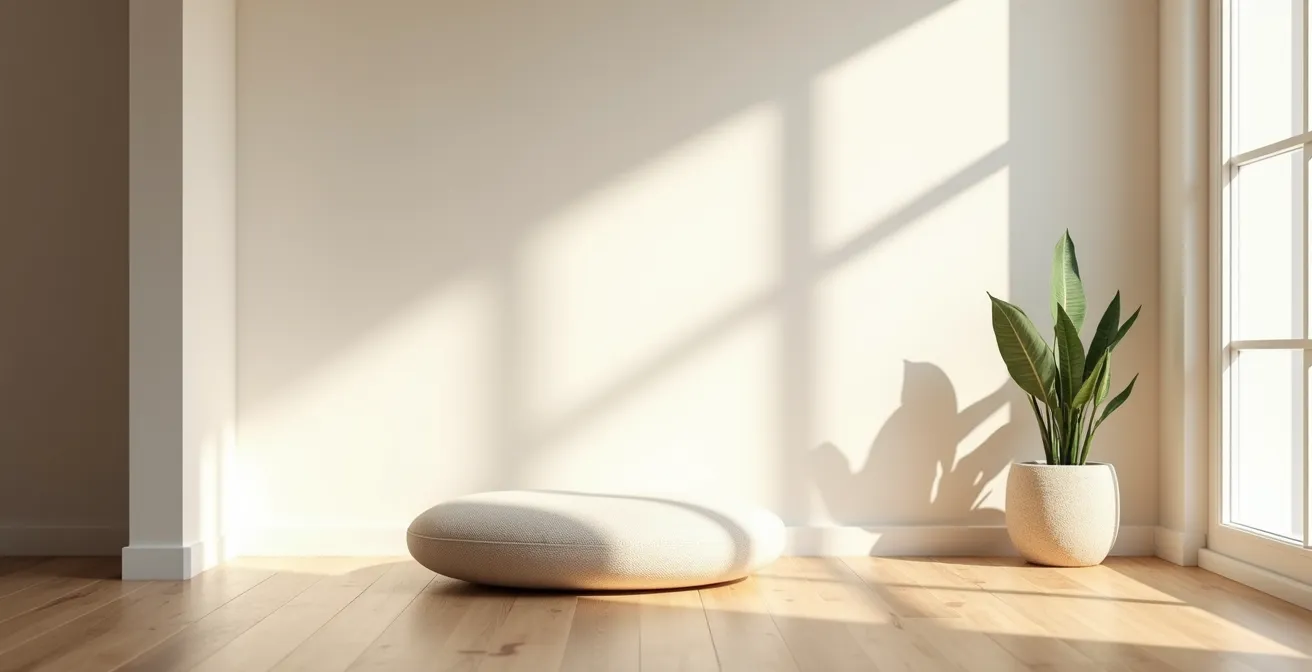
As this image illustrates, simplicity is the ultimate goal. An uncluttered space with soft, diffused light and minimal distractions provides a visual cue for your nervous system to power down. Spending just ten minutes in this environment, perhaps combined with the breathing techniques from the previous section, teaches your body the rhythm of recovery.
This routine is not about escape; it’s a training exercise. You are actively teaching your nervous system the pathway back to baseline, a skill that becomes more automatic with practice.
Nap vs Light Walk: Which Recovery Method Clears Brain Fog Faster?
By 2 PM, decision fatigue sets in. Your prefrontal cortex, the brain’s executive center, is running on fumes. The common advice is to either take a power nap or go for a walk. But for a results-driven individual, which is the more efficient tool for clearing brain fog? The answer depends on the type of fatigue you’re experiencing. Each method targets a different physiological mechanism, and choosing the right one is key for rapid recovery.
A short nap primarily combats attentional fatigue. Throughout the day, a neurochemical called adenosine builds up in your brain, binding to receptors and creating the feeling of sleep pressure or fogginess. Sleep is the only process that effectively clears adenosine. A quick 10-20 minute nap can significantly reduce adenosine levels, restoring alertness. However, it comes with the risk of “sleep inertia,” a period of grogginess upon waking if you enter deeper sleep stages.
A light walk, conversely, targets decision fatigue by a different route. It doesn’t clear adenosine, but it does increase blood flow, oxygen, and glucose to the brain, particularly the prefrontal cortex. This provides an immediate energy substrate for neural activity, boosting executive functions like focus and problem-solving. A walk also provides gentle optic flow—the visual motion of your surroundings—which has been shown to quiet the amygdala, the brain’s fear center, helping to reduce anxiety and rumination.
The following table, based on our understanding of neural recovery mechanisms, breaks down the optimal use case for each method. The choice isn’t about which is “better” in general, but which is the right tool for the job at hand.
| Factor | 10-Minute Nap | 10-Minute Walk |
|---|---|---|
| Best For | Attentional fatigue, adenosine buildup | Decision fatigue, prefrontal cortex activation |
| Mechanism | Clears adenosine from brain receptors | Increases blood flow and glucose to brain |
| Immediate Effect | May cause grogginess (sleep inertia) | Instant alertness boost |
| Duration of Benefit | 90-120 minutes | 45-60 minutes |
| Ideal Timing | Early afternoon (1-3pm) | Mid-morning or late afternoon |
In short: if your brain feels “full” and slow, a short nap is the solution. If you feel mentally stuck or anxious, a walk is the faster-acting intervention. Using both strategically throughout your week is a hallmark of effective energy management.
The “Nightcap” Trap: Why Alcohol Destroys Your Deep Sleep Quality?
For many high-stress professionals, an evening glass of wine or whiskey feels like a necessary tool to unwind. Alcohol is a sedative, and it does help you fall asleep faster. This initial effect reinforces the belief that it’s a helpful sleep aid. However, this is a physiological trap. While it sedates, alcohol systematically sabotages the architecture of your sleep, particularly the deep and REM stages that are critical for physical and mental recovery.
As your body metabolizes alcohol, it creates a “rebound effect.” About halfway through the night, the sedative effect wears off and is replaced by a surge of stimulating chemicals, leading to fragmented sleep and frequent awakenings you may not even remember. This process specifically devastates your REM sleep, the stage responsible for memory consolidation, emotional regulation, and creativity. A night of drinking can leave you feeling physically rested but mentally foggy and emotionally volatile the next day.
This isn’t just an anecdotal observation; it’s a dose-dependent pharmacological effect. A 2024 meta-analysis of 27 studies in Sleep Medicine Reviews found that even low doses of alcohol disrupt REM sleep, and the effect worsens significantly with higher consumption. The very tool used to alleviate stress ends up depleting the primary resource—quality sleep—needed to cope with it.
As the researchers Gardiner et al. noted in their review, this is a significant concern for anyone using alcohol as a casual sleep aid:
Larger doses of alcohol will result in greater REM sleep disruptions, highlighting a concern for the potential use of alcohol as an ‘over the counter’ sleep aid.
– Gardiner et al., Sleep Medicine Reviews

The solution is to replace the ritual of the nightcap with alternatives that promote relaxation without disrupting sleep architecture. Swapping alcohol for herbal teas containing chamomile or passionflower, or supplementing with magnesium glycinate, can provide a calming effect that supports, rather than destroys, your natural sleep cycles.
Ultimately, trading a few minutes of faster sleep onset for hours of poor-quality rest is a bad bargain for anyone serious about performance and well-being.
In What Order Should You Perform Evening Rituals to Prime Sleep?
Getting high-quality sleep isn’t about a single magic bullet; it’s about creating a sequence of events that signals to your brain and body that it’s time to power down. The order of these rituals matters because they leverage key physiological triggers, primarily changes in cortisol levels and core body temperature. A random approach might have some effect, but an evidence-based sequence acts as a powerful cascade, making sleep onset feel effortless rather than forced.
The process should begin about 90 minutes before your desired bedtime. The first step is not physical relaxation but mental offloading. Your brain can’t relax if it’s still cycling through the day’s worries or tomorrow’s to-do list. A “brain dump”—spending 5-10 minutes journaling everything on your mind—externalizes these anxieties. This act of writing lowers cortisol, the primary stress hormone, clearing the way for physical relaxation to take hold.
Next, you leverage temperature. A warm bath or shower about 60 minutes before bed does more than just relax your muscles. It raises your core body temperature. When you get out, the subsequent rapid drop in temperature is a powerful, evolutionarily ancient signal to the brain to initiate sleep. Moving into a cool bedroom (ideally 65-68°F or 18-20°C) enhances this effect, creating an irresistible drive towards sleepiness. Only then, once your mental and thermal triggers are set, do you move into direct relaxation techniques.
The optimal sequence is a physiological countdown:
- 90 min before bed: Brain Dump. Journal your worries and to-do lists to lower cortisol before starting physical relaxation.
- 60 min before bed: Warm Bath/Shower. Raise your core body temperature so it can drop dramatically afterward.
- 45 min before bed: Move to a Cool, Dim Room. Amplify the temperature-drop signal and reduce light exposure to allow melatonin production.
- 30 min before bed: Gentle Stretching. Relieve physical tension without raising your heart rate.
- 15 min before bed: 4-7-8 Breathing. In complete darkness, practice this powerful vagal nerve stimulation technique (inhale 4s, hold 7s, exhale 8s).
- In Bed: Progressive Muscle Relaxation. Tense and then release muscle groups sequentially, from your feet up to your head, to dissolve any remaining physical tension.
By treating your evening routine as a structured protocol, you transform it from a hopeful wish for sleep into a reliable system for deep, restorative rest.
How to Integrate Video Tools to Reduce “Zoom Fatigue” by 50%?
The exhaustion you feel after a day of video calls, often termed “Zoom Fatigue,” is not just mental. It is a direct result of your sympathetic nervous system being held in a prolonged state of low-grade threat detection. Constant direct eye contact, seeing your own face on screen, and the lack of normal non-verbal cues force your brain to work overtime to interpret social signals, keeping you on high alert. Reducing this fatigue requires consciously altering how you interact with the technology.
The core issue is a sustained “threat stare.” In person, our gaze naturally shifts and we use our peripheral vision. On a video call, we are locked into a focused, central-vision stare at a grid of faces. This visual state is neurologically associated with vigilance and threat assessment, which keeps the sympathetic nervous system activated. You can break this pattern without turning off your camera entirely.
The solution lies in implementing simple protocols that encourage a more natural mode of vision and introduce micro-breaks for nervous system regulation. This is not about avoiding calls, but making them physiologically tolerable. These adjustments can drastically reduce the cognitive load and prevent the sustained “on” state that leads to exhaustion.
Case Study: The “Soft Gaze” Protocol for Video Call Recovery
Organizations implementing a “soft gaze” protocol have reported up to a 50% reduction in self-reported video call fatigue among employees. The technique involves several micro-adjustments. First, users position the video window at the bottom of their screen, forcing a slight downward gaze that is less intense. Second, they implement a 2-minute “look away” break every 25 minutes, where they deliberately look out a window or at a distant object to engage their peripheral vision. Finally, for brainstorming or non-critical parts of meetings, teams switch to audio-only segments. These small changes prevent the brain from locking into the sympathetic “threat stare,” allowing for periodic shifts back to a parasympathetic state.
These small, consistent changes transform video conferencing from a draining experience into a sustainable tool for communication, preventing the cumulative fatigue that contributes to burnout.
Why Staying 5 Days in One Village Is Better Than Visiting 5 Cities in 5 Days?
The classic “whirlwind tour” vacation, designed to maximize sightseeing, often leaves you feeling more exhausted than when you left. From a nervous system perspective, this makes perfect sense. Rapidly moving through new and unfamiliar environments keeps your brain in a constant, low-grade state of threat assessment and novelty processing. You never give your parasympathetic system the chance to fully engage, which is the entire point of a restorative break.
When you arrive in a new place, your brain’s primary, subconscious job is to determine if the environment is safe. This process, known as neuroception, involves scanning for potential dangers, navigating unfamiliar layouts, and processing a flood of new sensory information. During this initial period, your sympathetic nervous system remains activated. You are not “resting”; you are orienting. Moving to a new city every day forces you to repeat this high-alert orientation phase over and over, preventing any deep recovery.
True physiological rest—the “rest-and-digest” state—only becomes possible once your brain has mapped the environment and categorized it as “safe” and predictable. This shift typically takes more than a day or two. By staying in one place, like a single village or neighborhood, for an extended period, you allow this process to complete.
Days 1-2 in a new place are spent in a low-grade sympathetic state of ‘threat assessment’ of the new environment. True parasympathetic ‘rest-and-digest’ is only achieved on Days 3-5, once the brain registers the environment as safe and familiar.
– Travel neuroscience researchers, Neurological perspective on travel stress
By day three in the same village, you know the route to the local cafe. You recognize faces. The sounds of the morning are familiar. This predictability is what signals your nervous system that it can finally stand down. The energy previously used for vigilance can now be redirected to genuine restoration. This is why a five-day stay in one spot can be profoundly more restful than a five-city tour covering far more ground.
For your next break, consider the radical act of going somewhere and doing less. Your nervous system will thank you for it.
Key Takeaways
- Vagus nerve stimulation, through specific breathing techniques like the physiological sigh, is the most direct and rapid physiological pathway to shift from anxiety to calm.
- Environmental factors are not passive backdrops; they are active triggers. Managing light, sound, and even your travel pace directly impacts your nervous system’s ability to enter a restorative state.
- Proactive “mental hygiene” is a trainable system. Building a toolkit of daily check-ins and state-change interventions is more effective than relying on reactive coping mechanisms like alcohol.
How to Build a “Mental Hygiene” Toolkit That Prevents Burnout Before It Starts?
Managing your nervous system shouldn’t be a reactive measure you only use during a crisis. Like dental hygiene, which prevents cavities before they form, mental hygiene is a daily practice designed to prevent burnout before it takes hold. It’s about building a personalized toolkit of brief, targeted interventions that you can deploy throughout the day to keep your nervous system regulated. This proactive approach builds resilience and stops the slow creep of sympathetic dominance from becoming your chronic baseline.
The foundation of this toolkit is daily self-awareness. You cannot manage what you do not measure. This starts with a simple, 2-minute body scan each morning. The goal is not to judge, but simply to identify your state: Are you feeling tense, with shallow breathing (sympathetic)? Or are you feeling calm and grounded (parasympathetic)? This check-in provides the data you need to choose the right intervention for the day.
Based on this data, you use your “State-Change Menu.” This isn’t a rigid routine but a flexible list of pre-decided actions categorized by the time they take. For example:
- 1-Minute Reset: Panoramic Vision. Soften your gaze and consciously take in your peripheral vision. This signals to your brain that there are no immediate threats, quieting the amygdala.
- 5-Minute Reset: Box Breathing or a Physiological Sigh protocol. A direct intervention to stimulate the vagus nerve.
- 10-Minute Reset: A brisk walk outside. This increases blood flow to the brain and provides optic flow to reduce anxiety.
By having this menu ready, you eliminate the decision fatigue of figuring out *how* to feel better in the moment. You simply identify your state and choose the appropriate tool from your kit. This proactive management is the key to long-term resilience and peak performance without the cost of burnout.
Your Action Plan: The Daily Nervous System Audit
- Morning Scan: Perform a 2-minute body scan upon waking. Identify your state: are you starting in sympathetic (tense, rapid thoughts) or parasympathetic (calm, grounded) mode?
- Create Your ‘State-Change Menu’: List your pre-approved interventions. Include a 1-minute option (e.g., panoramic vision), a 5-minute option (e.g., breathing technique), and a 10-minute option (e.g., light walk).
- Practice ‘Stress Pendulation’: Once a day, deliberately engage in 30 seconds of a fast-paced activity (like running in place) immediately followed by 1 minute of slow, diaphragmatic breathing to practice shifting states.
- Evening Rating: Before your sleep ritual, rate your nervous system state on a scale of 1-10 (1=total rest, 10=maximum stress). Apply the appropriate intervention from your menu to down-regulate.
- Weekly Review: At the end of the week, review your ratings. Which situations consistently triggered a high-stress state? Which tools were most effective? Adjust your toolkit accordingly.
Start today by building your State-Change Menu. This simple, proactive step is the most powerful investment you can make in your long-term mental and physiological well-being.