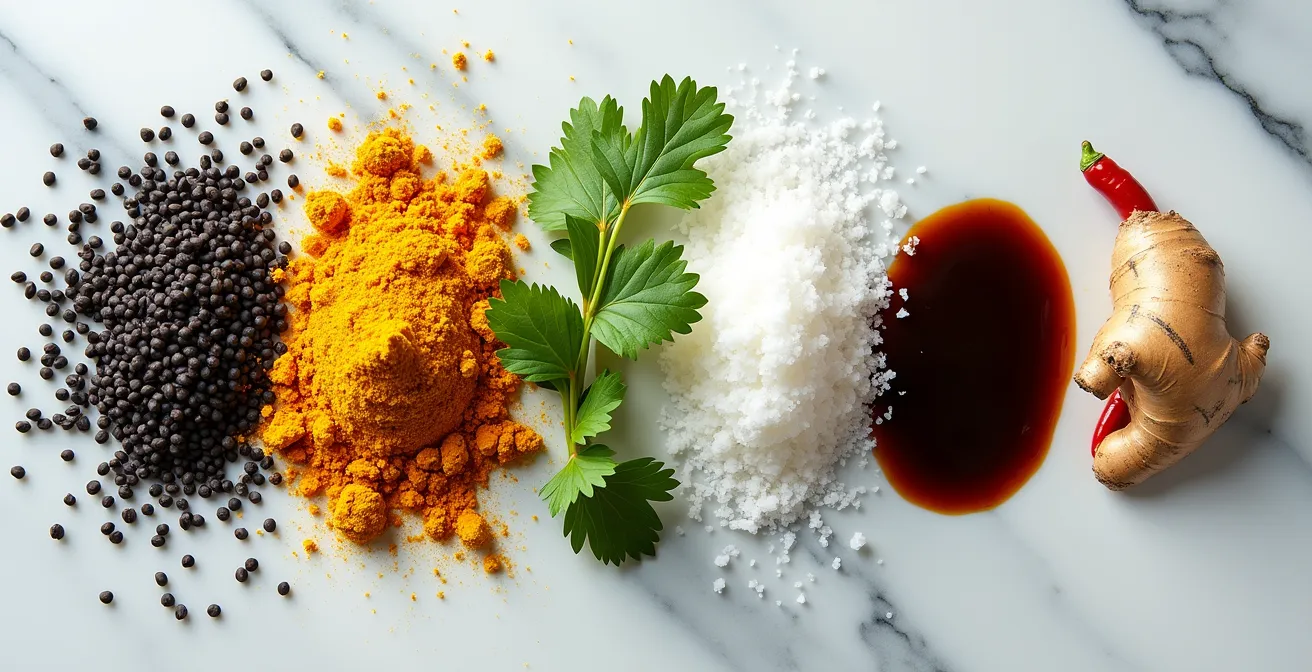
True fusion cuisine isn’t about randomly mixing ingredients; it’s about understanding and respecting a dish’s architectural soul.
- Identify the non-negotiable “structural core” of a dish versus its “flexible attire” to know where innovation is possible.
- Use flavor bridges and molecular science to create a conversation between ingredients, not a chaotic argument.
Recommendation: Always frame your creations as a “tribute” or an homage to a culture, never a replacement or “improvement.”
The allure of a pantry stocked with global ingredients is a siren’s call for any creative cook. The idea of weaving Japanese umami into an Italian classic or marrying the fire of Mexican chilies with the fragrant warmth of Indian spices is exhilarating. Yet, this path is fraught with peril. More often than not, these experiments end not in harmony, but in a muddled “confusion” of flavors, where individual ingredients scream for attention rather than singing in a choir. Many guides will offer basic advice: balance sweet and sour, start with familiar cuisines, or simply “be creative.”
But this advice only scratches the surface. It fails to address the fundamental question: what gives a dish its identity? The real craft of fusion cooking lies not in a chaotic mashup, but in a deep, respectful understanding of what can and cannot be changed. It’s a discipline akin to architecture. You can change the paint color, the furniture, and the decor of a house, but you cannot remove a load-bearing wall without the entire structure collapsing. The same is true for a recipe. The secret isn’t in mixing flavors, but in understanding a dish’s foundational structure.
This guide moves beyond generic tips to offer a new perspective: the principle of culinary architecture. We will explore the non-negotiable “soul” of a dish versus its flexible “attire.” By understanding the scientific and cultural logic behind food traditions, you can learn to break the rules with intention and respect. This approach will empower you to stop creating confusion and start curating culinary stories, transforming your kitchen from a laboratory of chaos into an artist’s studio of harmonious flavor.
To spark your creativity, the following video offers a beautiful example of this philosophy in action. It showcases a recipe for aromatic Masala-spiced cauliflower—a classic Indian flavor profile applied with a Western roasting technique to create something new and delicious.
This article is structured to guide you from the molecular science of flavor to the art of culinary storytelling. Each section builds upon the last, providing a complete framework for creating innovative and respectful fusion dishes.
Summary: A Guide to Creating Harmonious Fusion Cuisine
- Why Do Soy Sauce and Butter Work Together According to Molecular Pairing?
- How to Balance Indian Spices with Mexican Chilies in One Dish?
- Authenticity vs Innovation: When Is It Okay to Break Traditional Food Rules?
- The Seasoning Mistake That Kills the Flavor of Fresh Seafood
- How to Add “Crunch” to Soft Asian Noodles Using Western Techniques?
- How to Design a Trip That Prioritizes Deep Cultural Immersion Over Sightseeing?
- The “Costume” Mistake: How to Honor a Culture Without Mocking It?
- How to Curate a Dinner Party That Tells a Story Through Course Progression?
Why Do Soy Sauce and Butter Work Together According to Molecular Pairing?
The magical affinity between soy sauce and butter is more than a happy accident; it’s a masterclass in molecular gastronomy. On the surface, one is a symbol of Eastern umami, the other a cornerstone of Western richness. Their harmony lies in the science of glutamates and fats. Soy sauce is rich in glutamates, the compounds responsible for the savory, deeply satisfying taste of umami. Butter is primarily composed of milk fats, which are exceptional carriers of aroma and flavor.
When combined, the fat molecules in butter envelop the glutamate molecules from the soy sauce. This does two things: first, it coats the tongue, allowing the umami flavor to linger longer and feel more profound. Second, the butter tempers the pure saltiness of the soy sauce, creating a rounded, complex flavor that is greater than the sum of its parts. This synergy extends to kokumi, a related taste sensation described as heartiness or mouthfeel. Research shows that even a tiny 0.05% MSG concentration can enhance kokumi characteristics by up to 30%. The glutamates in soy sauce achieve a similar effect, amplified by the creamy texture of butter.
This principle of using fat to carry and amplify a water-based seasoning is a foundational “flavor bridge” in fusion cooking. It’s not limited to just soy and butter. Other science-backed pairings work on similar principles of shared compounds or complementary structures:
- Miso & Dark Chocolate: Both are fermented and rich in nucleotides, which work with glutamates to create an umami synergy, resulting in a deep, savory sweetness.
- Parmesan & Coffee: The lactones in aged cheese find a surprising harmony with the bitter compounds in coffee, creating a complex, toasted flavor profile.
- Strawberry & Black Pepper: These share volatile aromatic compounds, meaning they possess a similar underlying scent profile that our brain perceives as harmonious.
Understanding these molecular partnerships allows a chef to move beyond taste and start composing with the very building blocks of flavor.
How to Balance Indian Spices with Mexican Chilies in One Dish?
Combining two of the world’s most robust and complex flavor systems—the layered, aromatic spices of India and the earthy, smoky heat of Mexican chilies—can feel like conducting a duel. If both fight for dominance, the result is noise. The key to harmony is not equality, but hierarchy and strategic layering. You must decide which cuisine will form the base note and which will provide the accent.
Imagine your dish as a pyramid. The base might be a classic Indian profile: a foundation of toasted whole spices like cumin, coriander, and cardamom, bloomed in oil to release their fat-soluble aromas. This creates a warm, fragrant canvas. Then, you introduce the Mexican element not as a competitor, but as a focused, high-impact accent. Instead of a mix of chili powders, choose one specific chili for its unique character—a smoky chipotle for a top note of heat or a fruity ancho for a mid-palate sweetness. This chili is added later in the cooking process, so its flavor remains distinct and doesn’t muddy the Indian base.
Another crucial technique is creating balance through contrast. Both traditions use heat, but they also master cooling agents. A fiery chili-spiced element can be perfectly balanced by a cooling raita (yogurt-based Indian sauce) or a fresh, acidic Mexican salsa cruda. The cooling element doesn’t extinguish the fire; it provides a moment of relief that makes you want to go back for more heat. It creates a dynamic rhythm on the palate.
Case Study: Roy Choi’s Kogi Truck
Roy Choi’s legendary Kogi truck, launched in 2008, is a perfect example of this principle. He didn’t just mix Korean and Mexican flavors. He used the Mexican taco as the vessel, but the star was the Korean BBQ-marinated meat. He then masterfully balanced the sweet and spicy gochujang marinade with a tangy, cooling kimchi slaw, demonstrating how a complementary cooling agent can harmonize two powerful and distinct heat profiles from different culinary traditions.
Authenticity vs Innovation: When Is It Okay to Break Traditional Food Rules?
This is the most contentious question in modern cooking, and the answer lies in intent and understanding. Breaking a rule without understanding why it exists is culinary vandalism. Breaking a rule because you understand its function so deeply that you can achieve the same result in a new way is innovation. This is where the concept of “Culinary Architecture” becomes paramount. Every classic dish has a “structural core” and “flexible attire.”
The structural core represents the non-negotiable elements that define the dish’s soul. For a classic Carbonara, this is guanciale, egg, and Pecorino Romano cheese. To replace these with bacon, cream, and parmesan is not to innovate on Carbonara; it is to create an entirely different, albeit delicious, pasta dish. The innovation, therefore, should happen in the flexible attire—the pasta shape, the variety of black pepper, or the precise ratio of yolk to white. True creativity flourishes within these constraints.
The first step toward respectful innovation is humility. As culinary expert Christopher Koetke advises, you must position your dish as an homage, not a replacement. In his research for Ajinomoto Health and Nutrition, he highlights the importance of language.
The first step to honoring a cuisine is humility. Clearly frame your dish as a ‘tribute to’ or ‘inspired by’ a tradition, rather than claiming it’s an ‘authentic’ or ‘improved’ version.
– Christopher Koetke, Ajinomoto Health and Nutrition Culinary Research
This mindset shift is everything. It reframes the act of fusion from one of appropriation to one of appreciation. The following table, inspired by an analysis of culinary traditions, illustrates how to identify the core versus flexible elements in several classic dishes, providing a clear roadmap for innovation.
| Classic Dish | Core Elements (Non-negotiable) | Flexible Elements (Innovation-friendly) |
|---|---|---|
| Carbonara | Guanciale, Egg, Pecorino Romano | Pasta shape, Black pepper variety, Egg ratio |
| Paella | Saffron, Socarrat (crispy bottom), Short-grain rice | Protein choices, Vegetable additions, Cooking vessel size |
| Ramen | Alkaline noodles, Tare seasoning, Aromatic oil | Broth style, Toppings, Noodle thickness |
The Seasoning Mistake That Kills the Flavor of Fresh Seafood
When working with pristine, fresh seafood, the instinct is often to add a bright squeeze of lemon to “freshen” it up. This is the single most common mistake that can ruin a delicate piece of fish. The issue is harsh acidity. The strong citric acid in lemon juice doesn’t just add brightness; it chemically “cooks” the delicate proteins of the seafood, a process known as denaturation. This changes the texture, making it firm and opaque (as in a ceviche), and can overpower the subtle, sweet flavors of the fish itself.
Respecting the main ingredient means choosing your acid wisely. The goal is to add a hint of brightness that elevates, not obliterates. This requires a more nuanced approach, focusing on “soft” acids and alternative sources of brightness. Instead of lemon or lime, consider rice vinegar, verjus (the juice of unripe grapes), or the fragrant Japanese yuzu. These have a lower pH and a more complex flavor profile that complements rather than dominates the seafood.
Timing is also critical. Acid should be a finishing touch, added just before serving. Marinating delicate seafood in acid is a recipe for a mushy or rubbery texture. A far better approach is to use the aromatic oils found in citrus zest for aroma, and then add a tiny splash of juice at the very end. By understanding how acid interacts with protein, you can preserve the integrity and highlight the natural perfection of fresh seafood, a core tenet of cuisines from Japan to the Mediterranean.
Action Plan: Your Acid-Smart Seafood Seasoning Guide
- Assess your acid: Use ‘soft’ acids like rice vinegar (pH ~4.3), verjus (~3.5), or yuzu (~2.8) instead of harsh lemon or lime juice for delicate preparations.
- Buffer with fat: Incorporate acid into a vinaigrette with a quality oil. The fat molecules help buffer the acid’s direct impact on the seafood’s proteins.
- Master the timing: Never marinate delicate fish in strong acid. Add your acidic element right at the moment of service to preserve texture and flavor.
- Separate aroma from acid: For brightness without a textural change, use citrus zest during preparation for its aromatic oils, which won’t ‘cook’ the fish.
- Consider enzymes for texture: For tenderizing tougher seafood, look to the enzymatic properties of ginger or papaya rather than relying solely on acid.
How to Add “Crunch” to Soft Asian Noodles Using Western Techniques?
One of the most satisfying elements in any dish is textural contrast. Asian noodle dishes, particularly those in rich broths like ramen or pho, often masterfully layer flavors but can sometimes be uniformly soft. Introducing a crunchy element is a powerful way to add another dimension of enjoyment. While Asian cuisines have their own crunchy toppings (fried shallots, peanuts, crispy wonton strips), Western culinary traditions offer unique techniques that can be beautifully integrated.
The most elegant solution is often pangrattato, or “poor man’s Parmesan.” This classic Italian ingredient consists of breadcrumbs toasted in olive oil with garlic and herbs until golden and crisp. When sprinkled over a bowl of soft udon or ramen noodles, it provides a delightful, savory crunch that also soaks up a bit of the flavorful broth without becoming instantly soggy. It adds texture and a layer of toasted, garlicky flavor that complements many Asian profiles surprisingly well.
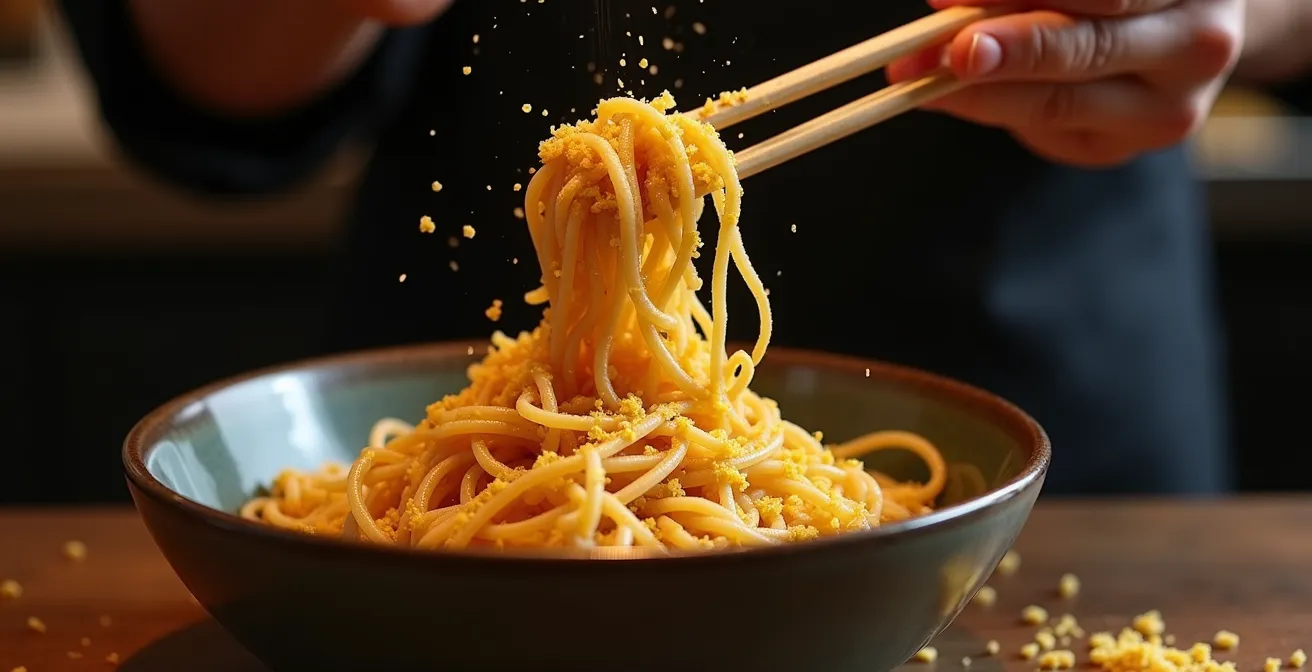
Another technique is to render a cured meat until crisp. While crispy pork belly is common in many Asian cuisines, using a distinctly Western ingredient like Italian pancetta or Spanish chorizo can create a fascinating fusion. When diced and sautéed until crunchy, these meats release their flavorful, spiced fat, which can then be drizzled over the noodles as a finishing oil, adding a layer of crisp texture and a specific, European-inflected smoky or paprika-laden flavor.
Case Study: Pangrattato on Ramen
The rise of dishes like Miso Carbonara shows how successful this textural innovation can be. Chefs incorporate crispy pancetta pieces with soft ramen noodles for a classic Italian-Japanese fusion. More directly, the simple act of topping a traditional Asian noodle soup with pangrattato adds both a satisfying crunch and a savory, umami-rich flavor that enhances the dish without overwhelming the delicate balance of the broth. It’s a perfect example of borrowing a technique to enhance, not replace.
How to Design a Trip That Prioritizes Deep Cultural Immersion Over Sightseeing?
For a chef, travel is not about collecting photos of landmarks; it’s about collecting flavors, techniques, and stories. To truly understand a cuisine, you must go beyond the tourist restaurants and immerse yourself in the culinary heartbeat of a place. A trip designed for deep cultural immersion abandons the typical sightseeing checklist in favor of a market-first itinerary. The local market is the theater of a region’s food culture, where you can see, smell, and touch the raw ingredients and observe the daily rituals of shopping and eating.
Instead of planning your days around museums, plan them around a single dish. Decide you will understand *pho* in Hanoi. This means trying it at five or more different venues: a legendary street food stall at dawn, a bustling family-run shophouse for lunch, and even an upscale hotel’s modern interpretation for dinner. This “single dish safari” reveals the subtle nuances and fierce debates that surround a nation’s most beloved foods. You learn what is core to the dish and what is open to personal interpretation.
As one chef noted about their experience moving to a new country, the real journey is an internal one.
When I moved to the States 9 years ago, the whole world of culinary traditions opened before us. It takes open mindedness to try cuisines outside your comfort zone. The exciting part is incorporating ingredients from a foreign culture into dishes we usually do – that’s how you see Indian spices in penne pasta and Italian herbs in Indian foods.
– Chef’s perspective, Hot Thai Kitchen
This curiosity is the engine of immersion. The goal is not just to taste, but to understand. Talk to vendors, watch home cooks, and, if possible, take a cooking class from a local grandmother, not a tourist-facing school. A truly immersive trip is measured not by the miles you travel, but by the depth of understanding you bring home. This is a framework for such a journey:
- Start at Dawn Markets: Experience ingredients at their freshest and observe local purchasing habits and social interactions.
- Follow One Dish Across Venues: Try a signature dish at multiple locations, from street food stalls to upscale restaurants, to understand its variations.
- Document Cooking Techniques: Pay attention to the “how.” Note specific grilling methods, fermentation processes, and knife skills you observe.
- Seek Out Home Cooks: Attend cooking classes led by home cooks rather than commercial tourist schools for a more authentic learning experience.
- Shop for Single Ingredients: Bring home one or two unique ingredients (a specific chili, a rare spice) with the goal of recreating a dish you discovered.
The “Costume” Mistake: How to Honor a Culture Without Mocking It?
The line between appreciation and appropriation is a fine one, and in cuisine, it is often crossed unintentionally. The “costume” mistake happens when a chef borrows the superficial aesthetics of a cuisine without understanding its substance. It’s like putting on a kimono without knowing how to tie the obi; the intent may be respectful, but the result can feel like a caricature. Honoring a culture in your cooking is not about using an exotic ingredient; it’s about understanding its function and context.
This is where deep respect comes from. It’s not enough to know that Thai cuisine uses galangal. You must ask *why* it uses galangal instead of the more common ginger in a Tom Kha soup. The answer lies in function: galangal has a piney, citrusy, and almost medicinal flavor that is essential to the soup’s profile, a role that the spicier, more pungent ginger cannot fill. Simply swapping one for the other is a superficial “swap” that ignores the ingredient’s purpose. Thoughtful fusion comes from this deeper level of inquiry.
Chef Pai Jaiyen of Hot Thai Kitchen captures this sentiment perfectly when discussing the ethics of fusion.
True respect comes from understanding the function of an ingredient in its original context. Why is galangal used over ginger? This understanding prevents superficial ‘swaps’ and leads to more thoughtful fusion.
– Pai Jaiyen, Hot Thai Kitchen – Thai and Asian Fusion Recipes
To avoid the costume mistake, you must become a student of the cuisine you are inspired by. Credit your sources. On a menu or when presenting a dish, tell the story. Explain that your dish is “inspired by” a traditional recipe and highlight the specific element you’ve borrowed or adapted. This act of crediting transforms you from a plunderer into a storyteller, inviting your diners into a respectful conversation between cultures. It’s the difference between wearing a culture as a costume and paying it a heartfelt, educated tribute.
Key Takeaways
- True fusion is architectural: respect the ‘structural core’ of a dish and innovate on its ‘flexible attire’.
- Use science and flavor bridges—like fat carrying umami—to create harmony rather than chaos.
- Always approach fusion with humility, framing your dish as a ‘tribute’ or ‘homage’, not an ‘improvement’.
How to Curate a Dinner Party That Tells a Story Through Course Progression?
A fusion dinner party should be more than a collection of disparate dishes; it should be a curated journey with a clear narrative. The ultimate expression of skillful fusion is not in a single dish, but in the ability to tell a story across multiple courses. This requires a narrative bridge—a theme or ingredient that connects each course and guides your guests through a cohesive experience.
There are several successful approaches to this kind of culinary storytelling. You could design a Geographic Journey, following a historical path like the Silk Road. Each course represents a different point along the route, connected by a shared ingredient that traveled the same path, such as a specific spice like star anise or a common ingredient like almonds. This creates a sense of movement and discovery.
Another powerful method is the Deconstructed Classic. Here, you take one iconic dish and explore its core flavors across three different courses. A Thai green curry, for example, could be reinterpreted as a light, fragrant soup to start, followed by a main course of grilled protein marinated in the core curry spices, and finishing with a dessert featuring a key flavor like coconut or lemongrass. The story here is one of deep exploration into a single, beloved flavor profile.
Case Study: The Silk Road Dinner
A highly successful fusion dinner party used the Silk Road as its narrative theme. The menu began with Chinese dan bing crepes, transitioned to a main course of Persian-spiced lamb with pomegranate, and concluded with an Italian affogato infused with cardamom. The “narrative bridge” was the subtle but consistent use of nuts (almonds in the starter, pistachios in the main, walnuts with the dessert) which are a staple along the entire trade route, tying the diverse cuisines together into a single, elegant story.
The following table outlines three distinct storytelling approaches to help you structure your own fusion menu.
| Menu Style | Narrative Structure | Example Progression | Bridge Element |
|---|---|---|---|
| Geographic Journey | Follow historical trade routes | Chinese → Persian → Italian (Silk Road) | Common spice (e.g., star anise) |
| Deconstructed Classic | One dish, multiple interpretations | Thai curry as soup → grilled protein → dessert | Core flavor profile (coconut, lemongrass, lime) |
| Single Ingredient Focus | Ingredient’s global adoption | Tomato: Gazpacho → Shakshuka → Tikka Masala | The hero ingredient prepared differently |
By embracing these principles—from molecular science to culinary architecture and narrative storytelling—you elevate fusion cooking from a risky experiment to a profound art form. Your kitchen becomes a space for respectful dialogue between cultures, and every dish becomes an opportunity to share a story. The next step is to choose your first story and begin composing.
Frequently Asked Questions About Fusion Cuisine
How do I know if I’m appropriating versus appreciating a cuisine?
Appropriation typically involves claiming ownership or ‘improving’ traditional dishes without acknowledgment. Appreciation involves learning the history, crediting origins, and presenting dishes as ‘inspired by’ rather than authentic.
Should fusion dishes use traditional names?
It’s best to create new names that acknowledge both influences (like ‘Korean BBQ Tacos’) rather than using traditional names incorrectly, which can be misleading and disrespectful.
How can I educate diners about the cultural origins?
Include brief origin stories on menus, train staff to explain influences, and share the ‘why’ behind ingredient choices through social media or table cards.