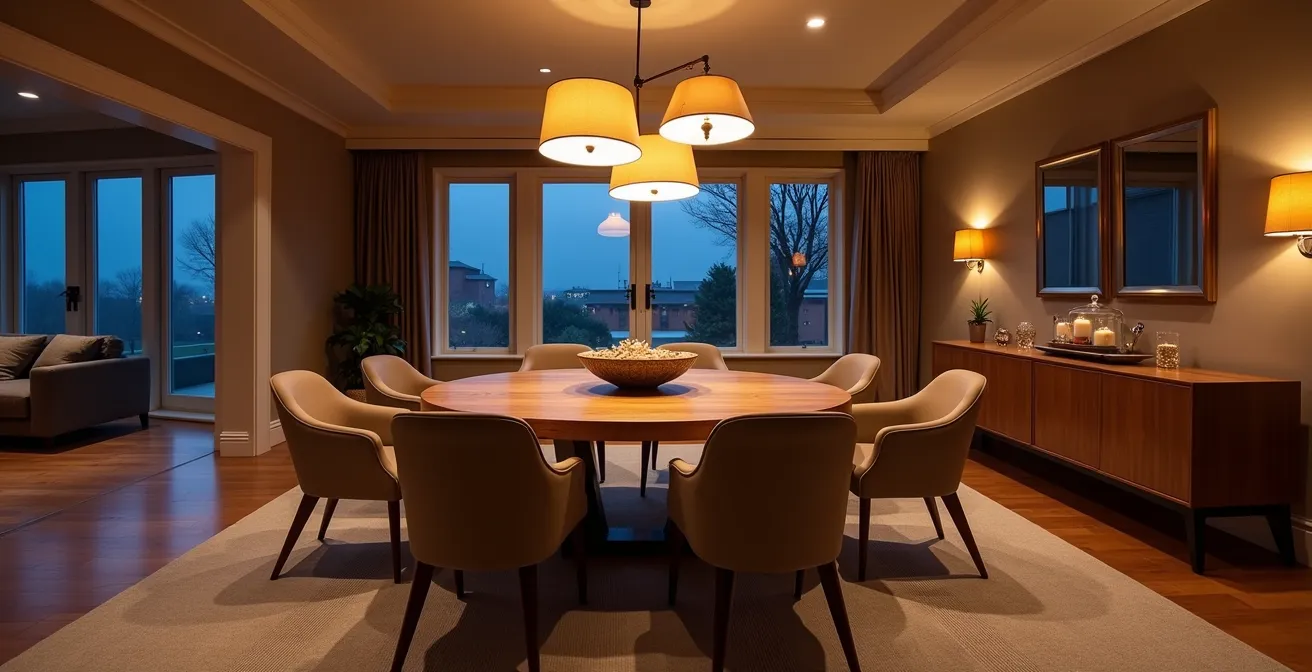
Creating a dining room where guests linger isn’t about expensive chairs or fancy decor; it’s about mastering the sensory psychology of the space.
- Subtle shifts in lighting and acoustics have a greater impact on conversation and comfort than the physical furniture.
- A ‘narrative pace’—guiding guests through different sensory stages—transforms a simple meal into a memorable, shared story.
Recommendation: Focus on orchestrating a journey of comfort, from the initial welcome to the final after-dinner conversation, by controlling the unseen elements of your environment.
We’ve all been there: a dinner party that feels like it ends the moment the main course is cleared. The conversation dwindles, guests glance at their watches, and the warm, buzzing energy dissipates. As a host, it’s a familiar pang of disappointment. You’ve perfected the menu and set a beautiful table, yet the deep, lingering connection you hoped for never quite materializes. The common advice is to invest in comfortable chairs or choose a round table, but these are merely single notes in a complex symphony.
What if the secret to a dinner party that stretches late into the night has less to do with what your guests *see*, and more with what they subconsciously *feel*? The true art of hospitality lies not in decoration, but in a deliberate act of sensory orchestration. It’s about understanding how light alters taste, how sound shapes intimacy, and how the very geometry of the room can either build bridges or erect walls between people. This is about designing an environment that systematically lowers stress and encourages vulnerability.
This guide moves beyond surface-level tips to explore the psychological and sensory mechanics of a truly welcoming dining space. We will deconstruct the experience, from the first impression to the final, comfortable sigh of a guest who has completely lost track of time. By mastering these unseen forces, you can craft a dining room that doesn’t just host meals, but curates memories and fosters relationships that last long after the last plate is cleared.
To achieve this, we will delve into the science and art of creating an irresistible atmosphere. The following sections will provide a roadmap for transforming your dining area into a haven of conversation and comfort, ensuring your guests feel too welcome to leave.
Summary: Designing a Dining Room for Lingering and Connection
- Why Dimming the Lights Makes Food Taste Better and Guests Talk More?
- How to Choose a Table Shape That Eliminates Dead Silence at Dinner Parties?
- Formal Dining Room vs Eat-In Kitchen: Which Adds More Value to a Family Home?
- The “Cluttered Table” Effect: Why Eating Amidst Mess Increases Stress Hormones?
- How to Dampen Echoes in a Modern Dining Room So Everyone Can Hear?
- Why Increasing Customer “Dwell Time” by 10 Minutes Boosts Sales by 30%?
- The “Glass Box” Mistake: Why Visual Walls Don’t Stop Meeting Confidentiality Leaks?
- How to Curate a Dinner Party That Tells a Story Through Course Progression?
Why Dimming the Lights Makes Food Taste Better and Guests Talk More?
Lighting is the most powerful, yet often underestimated, tool in a host’s arsenal. It does more than just illuminate a space; it directs emotion, alters perception, and sets the narrative pace for an entire evening. Bright, overhead lighting is functional, but it’s also clinical. It puts guests on high alert, creating a formal, slightly exposed feeling that stifles intimate conversation. When you dim the lights, you’re sending a powerful subconscious signal: it’s time to relax, to let your guard down, and to connect.
This effect is rooted in our biology. Lower, warmer light (around 2700K-3000K) mimics the glow of firelight, an ancestral cue for safety, community, and storytelling. This sense of security makes guests more likely to open up and engage in deeper conversation. Furthermore, dimming the lights enhances our other senses. With less visual information to process, our brains pay more attention to taste and smell. In fact, research from Brown University reveals that smell sensitivity varies by up to 25% across a 24-hour circadian cycle, and a relaxed state enhances this sensitivity. Food literally tastes and smells richer in a softly lit environment.
The key is not just to dim the lights, but to create a dynamic lighting sequence. This transforms the lighting from a static feature into an active participant in the evening’s story, guiding guests through different emotional states. By mastering this sensory orchestration, you control the energy of the room from arrival to departure.
How to Choose a Table Shape That Eliminates Dead Silence at Dinner Parties?
The dining table is the stage for your social event, and its shape—its very geometry—dictates the flow of conversation. Choosing a table isn’t just an aesthetic decision; it’s a strategic one that can either foster a unified, lively discussion or create awkward pockets of silence. The science behind this is proxemics, the study of human use of space. It dictates our comfort levels in social interactions.
According to anthropologist Edward T. Hall’s proxemics theory, our ‘personal distance’ zone for close friends is between 1.5 and 4 feet. A well-chosen table keeps every guest within this range of at least a few others. A large rectangular table often fails this test. Guests in the middle become isolated, unable to speak with those at the ends, creating a “dead zone” where conversation dies. This forces people into small, fractured dialogues with their immediate neighbors rather than participating in a single, inclusive group conversation.
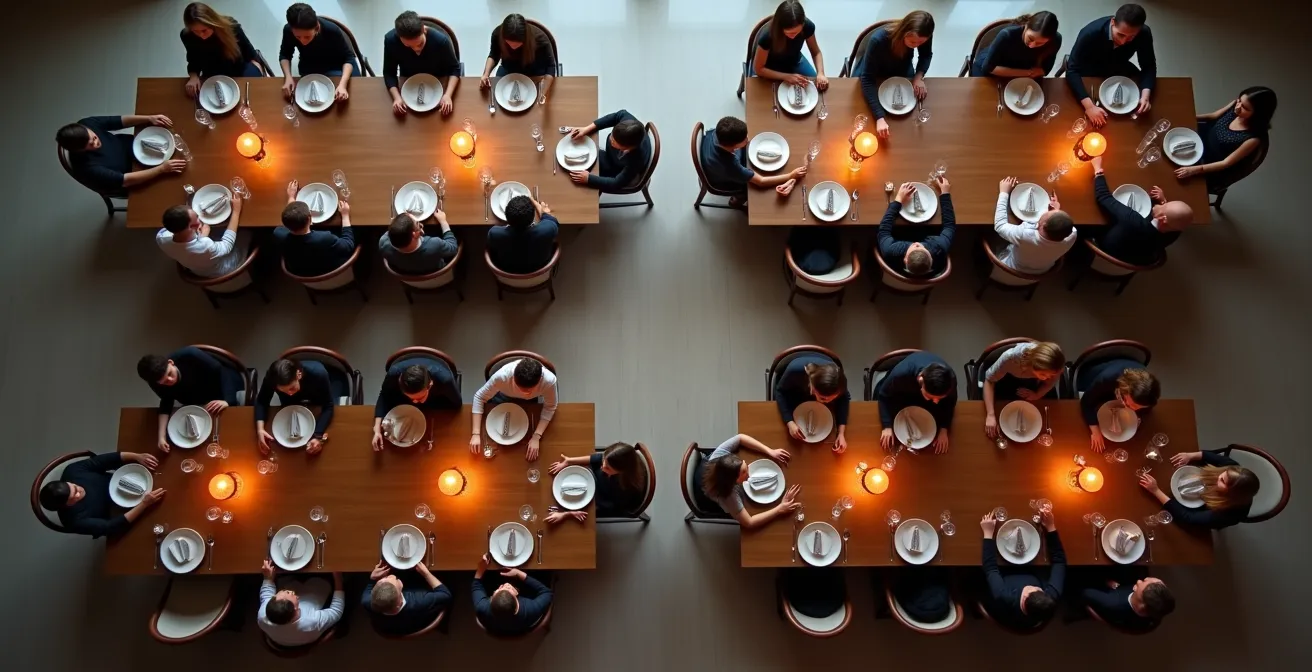
The shape of your table directly influences this conversational geometry. Round and square tables are the most democratic, placing everyone at an equal distance and sightline, promoting a single, unified conversation. Ovals offer a brilliant compromise, maintaining the inclusivity of a round table while accommodating more guests. The goal is to eliminate barriers and ensure every guest feels seen, heard, and included in the collective experience.
This table from a comparative analysis by design experts breaks down the conversational dynamics of each shape.
| Table Shape | Conversation Pattern | Ideal Group Size | Dead Zone Risk |
|---|---|---|---|
| Round | Democratic, all inclusive | 4-6 people | Very Low |
| Oval | Hybrid democratic with capacity | 6-8 people | Low |
| Square | Four-way equal exchange | 4-8 people | Low |
| Rectangular | End-focused hierarchy | 8-12 people | High (middle seats) |
Formal Dining Room vs Eat-In Kitchen: Which Adds More Value to a Family Home?
For decades, the open-concept floor plan reigned supreme, with the eat-in kitchen positioned as the heart of the modern, casual home. The formal dining room was often seen as a relic—a stuffy, underused space. However, a significant shift is underway. After years of living, working, and schooling in a single, open area, homeowners are rediscovering the profound value of dedicated spaces. The formal dining room is experiencing a powerful resurgence, not just as a place to eat, but as a sanctuary for connection.
The primary value of a formal dining room is psychological separation. When you move to a separate room for a meal, you are physically and mentally transitioning away from the clutter of daily life—the kitchen mess, the work laptop on the counter, the school bags by the door. This act of separation signals that the event is special and deserves undivided attention. It creates a distraction-free environment where conversation can flourish without the background noise and visual chaos of a multi-purpose space. As the interior design experts at Good Housekeeping report, closed-concept layouts are seeing increased demand precisely for this reason.
This craving for dedicated spaces is perfectly captured by their editorial team.
Once again, homeowners are craving quiet, private rooms dedicated to good food and great conversation
– Good Housekeeping Editorial Team, 90 Unique Dining Room Ideas, Layouts and Decorating Tips
While an eat-in kitchen offers convenience, a formal dining room adds a different kind of value: the value of intentionality. It provides a dedicated stage for creating memorable social experiences, a crucial element for family bonding and sophisticated hosting. In today’s market, this added layer of function and psychological comfort is increasingly seen as a significant asset to a family home.
The “Cluttered Table” Effect: Why Eating Amidst Mess Increases Stress Hormones?
The state of your dining table is a direct reflection of the state of mind you are inviting your guests into. A cluttered surface, piled with mail, keys, and other daily detritus, does more than just look messy; it actively triggers a low-grade stress response in our brains. This “cluttered table effect” is a form of cognitive overload. Every non-essential item is a tiny, unresolved to-do list that competes for mental bandwidth, preventing guests—and the host—from fully relaxing and immersing themselves in the moment.
A serene dining experience begins with a clean slate. Clearing the table of everything not directly related to the meal is not just about tidiness; it is an act of psychological clearing. It communicates that this time is sacred and dedicated solely to the pleasure of food and company. The goal is to create a tablescape that feels intentional, not accidental. This means limiting centerpieces to low-profile arrangements that don’t block sightlines and using a nearby sideboard or console for staging courses and holding serving dishes. This keeps the main table clear for connection.
The principle is simple: every object on the table should either serve the meal or spark joy and conversation. Anything else is a distraction that subtly raises stress levels and creates a barrier to intimacy. By curating a minimalist yet beautiful environment, you create the mental space necessary for guests to feel calm, present, and engaged.
Action Plan: Auditing Your Table for Serenity
- Points of Contact: Identify all surfaces that contribute to the dining experience—the main table, sideboards, consoles, and any nearby countertops visible from the seating area.
- Collecte: Before setting the table, perform a sweep and inventory all items currently occupying these surfaces that are not essential for the meal (e.g., mail, laptops, keys, everyday clutter).
- Cohérence: For each item, ask: “Does this object support a serene and connected dining experience?” Confront the items against the goal of stress-free dining.
- Mémorabilité/Émotion: Evaluate your centerpiece and decor. Is it a unique, low-profile ‘conversation piece’, or a generic, tall arrangement that obstructs views and feels like filler?
- Plan d’intégration: Create a permanent plan to relocate non-essential items to designated “out-of-sight” zones before every meal. Use the sideboard exclusively for serving and a bar cart for beverages to protect the table’s sanctity.
How to Dampen Echoes in a Modern Dining Room So Everyone Can Hear?
You can have the perfect lighting and the most comfortable chairs, but if guests have to shout to be heard over the room’s echo, all is lost. Modern interior design, with its love for hardwood floors, large windows, and minimalist decor, often creates an acoustic nightmare. These hard, reflective surfaces cause sound waves to bounce around the room, creating a cacophony of echo and reverberation known as “flutter echo.” This forces everyone to speak louder, which in turn increases the overall noise level, making conversation exhausting and fragmented.
Creating acoustic intimacy is about absorbing, not reflecting, sound. The solution is to introduce soft, porous materials that trap sound waves and stop them from bouncing. This doesn’t mean you have to sacrifice your modern aesthetic for wall-to-wall carpeting. The key is to layer different sound-absorbing elements strategically throughout the space. Think of it as creating a “sonic cocoon” where conversations are crisp, clear, and confidential.
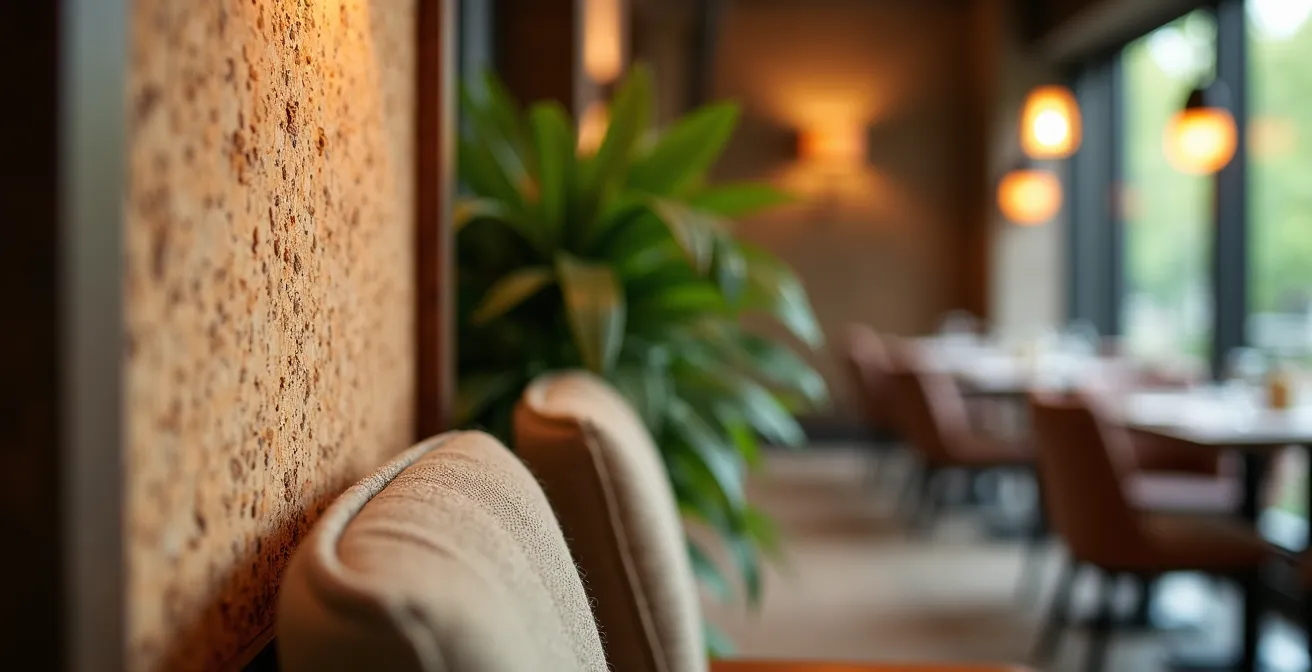
Start from the ground up with a thick area rug under the table. Add heavy, fabric curtains or drapes to the windows. Opt for upholstered dining chairs instead of wood or metal. Even a large fabric wall hanging or a canvas painting can make a significant difference. For a more advanced solution, acoustic panels disguised as art, or textured wall coverings like cork or felt, can absorb a huge amount of noise while adding visual warmth and texture. A well-placed collection of houseplants can also help diffuse sound waves.
This table, based on recommendations from home design professionals, shows how you can approach acoustic treatment based on your budget.
| Budget Level | Solution | Noise Reduction | Cost Range |
|---|---|---|---|
| Low | Thick area rugs, heavy curtains | 15-25% | $200-500 |
| Medium | Upholstered chairs, fabric wall art | 25-35% | $500-1500 |
| High | Acoustic panels, cork walls, felt coverings | 40-60% | $1500-5000 |
Why Increasing Customer “Dwell Time” by 10 Minutes Boosts Sales by 30%?
In the world of retail and hospitality, “dwell time”—the length of time a customer stays in a space—is a critical metric. The longer someone lingers, the more connected they feel to the brand and the more likely they are to spend. While you’re not running a restaurant, the same principle applies to your home: the “sale” you’re making is on connection and memory. By designing an experience that encourages guests to linger, you are increasing the “return on investment” of your social gathering. The secret to extending this dwell time lies in managing the transitions, particularly the one that happens after the meal is over.
This is where the Peak-End Rule comes into play, a psychological heuristic where people judge an experience largely based on how they felt at its most intense point (the peak) and at its end. A successful host designs a memorable “end” that is separate from the dining table. The post-dinner phase should feel like a deliberate and luxurious next chapter, not an afterthought. This means creating a dedicated “linger zone.”
Case Study: Applying the Peak-End Rule to Dinner Party Design
Expert event designers create distinct comfort transitions to craft a powerful “end” experience. As noted by entertaining specialists, lighting is paramount: “Turn off the overheads, dim the lamps, and light candles everywhere. The glow instantly makes a space feel chic and welcoming.” The key is to signal a shift in mood. Successful hosts design specific ‘linger zones’ by adding comforting textures like a “throw or sheepskin to the sofa” and stacking blankets nearby. This non-verbal invitation to get comfortable encourages guests to settle in for conversation long after the meal itself has concluded, transforming a simple dinner into a multi-act experience.
To engineer this crucial transition, you must guide your guests from the structure of dining to the comfort of lounging. Consider these steps to design the perfect post-dinner experience:
- Set up a dedicated digestif, coffee, or tea station away from the dining table.
- Arrange comfortable lounge seating within a close conversational distance (4-6 feet).
- Switch the music to something more ambient and lower the volume by about 30%.
- Dim the lights even further, to a very intimate 5-10 lux.
- Drape soft throws and cushions over chairs and sofas to explicitly signal the “comfort phase.”
The “Glass Box” Mistake: Why Visual Walls Don’t Stop Meeting Confidentiality Leaks?
In corporate design, a “glass box” meeting room looks separate but provides no acoustic privacy, rendering it useless for confidential discussions. The domestic equivalent is the dining area in an open-plan home. You may have a visually distinct dining “zone,” but if it doesn’t *feel* separate, it suffers from the same lack of intimacy. Guests feel exposed, conversations are subconsciously kept at a surface level, and the ambient noise and movement from the kitchen and living areas constantly intrude. To make guests feel safe enough to linger and connect, you must create a sense of psychological enclosure.
This doesn’t require building physical walls. Instead, you can use subtle design cues to create a “room within a room.” These cues act as soft boundaries that contain the energy of the dining space and protect it from the rest of the home. The goal is to create a sense of embrace and focus, drawing all attention inward to the table and the people around it. This is a key principle in making a large, open space feel hospitable and intimate.
You can achieve this psychological enclosure through several key strategies:
- Define the Ceiling: Use a large, low-hanging pendant light or chandelier directly over the table. This creates a visual “ceiling” that lowers the perceived height of the space and defines the dining area’s vertical boundaries.
- Anchor the Floor: A substantial area rug is non-negotiable. It should be large enough that all chairs remain on the rug even when pulled out. This creates a tangible “island” for the dining zone.
- Create Soft Walls: Use tall plants, decorative folding screens, or open-backed bookshelves to create partial visual barriers. These elements suggest separation without fully closing off the space.
- Give Guests a “Secure” Back: Whenever possible, arrange the table so that most guests have a solid wall or a substantial piece of furniture behind them. This taps into a primal need for security, making people feel less exposed.
By layering these elements, you transform a vague area into a defined, intentional, and psychologically comfortable space where guests feel secure enough to truly settle in.
Key Takeaways
- Focus on dynamic lighting and sound-absorbing textures to control the room’s energy and foster intimacy.
- The table’s geometry—its shape and the space around it—directly dictates conversation flow and social connection.
- Create a narrative for the evening by designing distinct sensory phases, from dining to lounging, to encourage extended, comfortable stays.
How to Curate a Dinner Party That Tells a Story Through Course Progression?
The most memorable dinner parties are not just a collection of nice things; they are a cohesive narrative. They have a beginning, a middle, and an end, all woven together through a consistent sensory theme. Thinking like a curator allows you to elevate a meal into an experience. This means orchestrating all sensory inputs—light, sound, scent, and even texture—to evolve in harmony with the progression of the meal itself. This is the pinnacle of sensory orchestration.
The story begins before guests even sit down. The lighting in the entryway and living area should be welcoming. The music should be present but not intrusive, setting a backdrop that encourages conversation. As you transition to the dining table for appetizers, the lighting can be a little brighter, the music a touch more upbeat. As the main course is served, the lights dim, the music softens, and the focus narrows to the table. This shift signals a move toward more intimate conversation. Finally, for dessert and after-dinner drinks—perhaps in a separate lounge area—the lighting becomes very dim and warm, the music mellows completely, and soft textures like blankets are introduced. This is the final chapter, designed for comfort and lingering.
This sensory syncing extends to every detail. Consider a simple centerpiece of single stems for the start of the meal, adding more seasonal elements for the main course, and finally clearing it away for a collection of candles during dessert. Even scent can play a role: a light citrus or herbal scent upon arrival, no competing fragrances during the meal, and a warm vanilla or woodsy scent for the after-dinner phase. Each change is a deliberate plot point in the story of your evening, guiding your guests through a seamless and immersive journey.
Now that you are equipped with the principles of sensory design, start by choosing one element—lighting, sound, or space—and transform it. Observe how even a small, intentional change can create a dining experience so captivating that your guests will never want it to end.
Frequently Asked Questions on Curating a Dinner Party Experience
How do I coordinate lighting changes with each course?
Use smart bulbs or dimmer switches to pre-program lighting scenes. A simple approach is to brighten slightly for appetizers (around 40 lux to encourage social energy), dim significantly for the main course (around 20 lux for intimacy), and go very low and warm for dessert (around 10 lux) to create a cozy, relaxed atmosphere.
Should centerpieces change throughout the meal?
Yes, for a truly curated experience, evolve your centerpiece. You can start simple with single stems in bud vases, add a fuller, seasonal arrangement for the main course, and then transition to a simple collection of votive candles and small decorative objects for dessert to lower the visual height and enhance the intimate glow.
What scents work best for different dinner phases?
Scent should be subtle and complementary. A light, clean scent like citrus or fresh herbs is perfect for the arrival and cocktail phase. It’s crucial to have no competing artificial scents during the meal itself, allowing the aroma of the food to be the star. For the after-dinner lounge period, a warm, comforting scent like sandalwood, vanilla, or cedar can enhance the feeling of coziness.