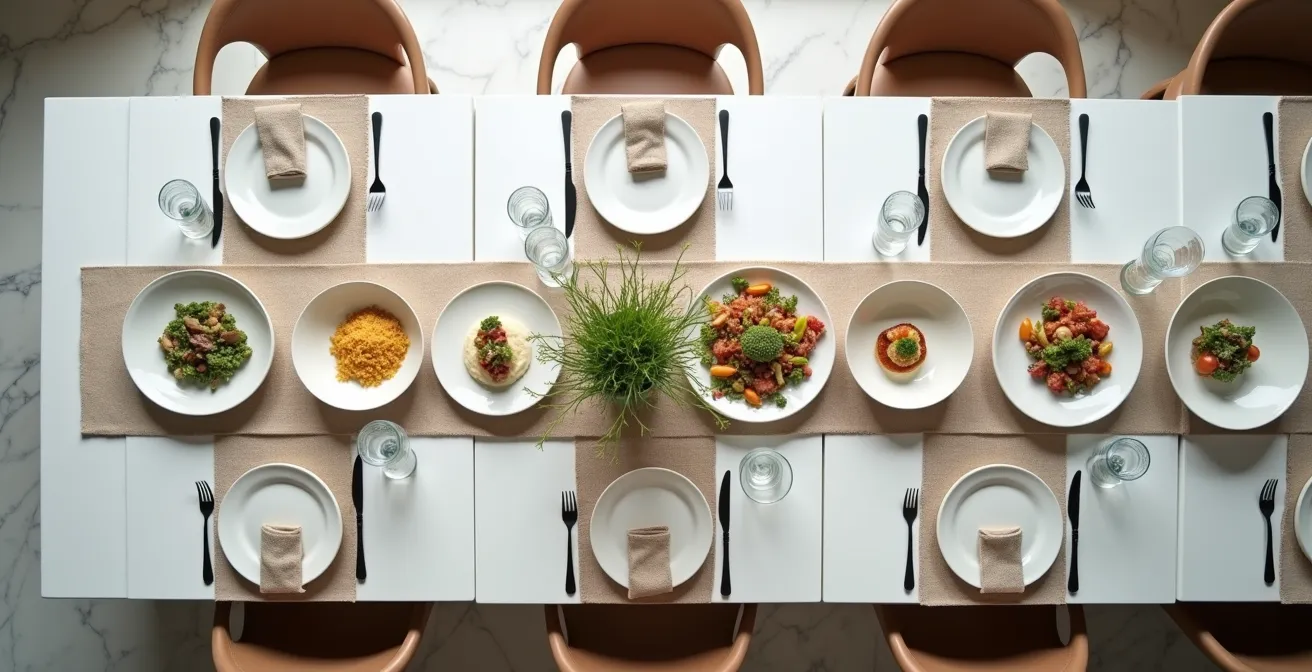
A truly memorable dinner party is not just hosted; it is directed, using a deliberate system of sensory architecture to tell a cohesive story.
- The meal’s theme acts as the narrative script, guiding every choice from ingredients to music.
- The progression of courses should follow a “flavor arc,” with a clear beginning (Act I), middle (Climax), and end (Resolution) to manage the guest’s palate.
- Cultural inspiration must be treated as a story to be shared with credit, not a costume to be worn, to ensure respect and authenticity.
Recommendation: Begin by choosing a single, simple story you want to tell—a memory, a journey, a feeling—and let that one idea inform every single element of your next dinner party.
Every host dreams of throwing that one, perfect dinner party—the one guests talk about for years. We search for the right recipes, build the perfect playlist, and agonize over the table settings. We believe the key lies in perfecting these individual elements. We focus on having a theme, like “Tuscan Night,” or ensuring the decor is flawless. But these are often just isolated components, beautiful but disconnected.
What if the secret to an unforgettable evening wasn’t just about having a theme, but about telling a story? What if the food, the music, and the atmosphere were not separate items on a checklist, but chapters in a single, immersive narrative? This approach transforms you from a simple host into a Culinary Director. It’s about architecting an experience, guiding your guests on a journey where every sensory input, from the first sip of wine to the last bite of dessert, serves the plot.
This guide will move beyond conventional advice. We won’t just tell you to “pick a theme”; we will explore how to build a narrative arc with it. We will decode the science of using music to change how wine tastes and unpack the structural principles of ordering dishes to keep palates engaged. By the end, you will have a new framework for thinking about food as a medium for storytelling, empowering you to create dining experiences that are not just delicious, but deeply meaningful and memorable.
text
To guide you in becoming a true culinary director, this article is structured to build your skills progressively. We will explore each critical layer of narrative dining, from establishing a powerful theme to mastering the art of culinary dialogue.
Summary: The Art of Crafting a Narrative Meal
- Why A Strong Theme Transforming a Good Meal into an Unforgettable Memory?
- How to Create a Playlist That Scientifically Enhances the Flavor of Wine?
- Regional Pairing vs Best-in-Class: Should You Serve Italian Wine with Italian Food?
- The “Costume” Mistake: How to Honor a Culture Without Mocking It?
- In What Order Should You Serve Rich vs Acidic Dishes to Keep Palates Fresh?
- Why Staying 5 Days in One Village Is Better Than Visiting 5 Cities in 5 Days?
- Authenticity vs Innovation: When Is It Okay to Break Traditional Food Rules?
- How to Combine Cuisines Without Creating a “Confusion” of Flavors?
Why A Strong Theme Transforming a Good Meal into an Unforgettable Memory?
A theme is not just a decorative concept; it is the narrative spine of your dining experience. It’s the difference between a “seafood dinner” and a dinner titled “A Fisherman’s Return,” where each course tells a part of the journey from sea to table. This narrative framework provides cognitive scaffolding for memory, making the meal stick in your guests’ minds long after they’ve gone home. When a meal has a story, it becomes an event, a shared experience that transcends the food on the plate. In fact, an Eventbrite survey confirms that 75% of people are willing to pay more for a unique dining experience, proving the immense value of a compelling narrative.
To build this narrative, think in three layers of expression. First is the food itself, where each dish embodies the theme through ingredients or cooking methods. Second is the physical atmosphere, using lighting and table settings to reinforce the story without overwhelming it. The final, crucial layer is verbal anchoring. Briefly sharing the inspiration behind a course connects the dots for your guests, transforming a delicious dish into a meaningful chapter of the story. This turns passive eating into active engagement.
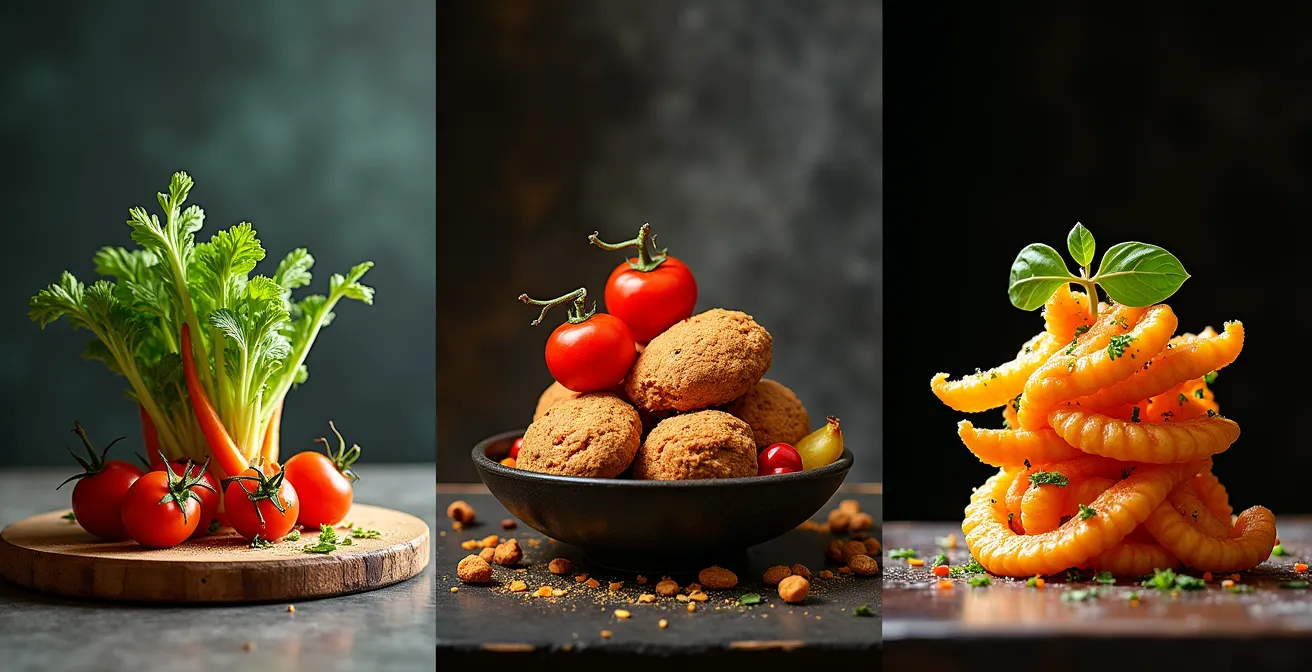
As this visualization suggests, a strong theme like “Redemption” can be expressed by transforming humble, wilted ingredients into vibrant, elegant dishes. A theme of “Journey Home” might reimagine childhood comfort foods with sophisticated techniques. The theme provides the “why” behind your “what,” giving every element a purpose and creating a cohesive, unforgettable memory.
Ultimately, a strong theme transforms you from a cook into a curator, and your meal from a menu into a masterpiece.
How to Create a Playlist That Scientifically Enhances the Flavor of Wine?
Music is not just background noise at a dinner party; it is an active ingredient. The emerging field of neurogastronomy reveals that what we hear directly impacts what we taste. This concept, known as “sonic seasoning,” goes far beyond simply matching the mood of the music to the event. It involves using specific auditory frequencies to scientifically alter the perception of flavor on the palate. By curating a playlist with this in mind, you can actively make your wine and food taste better.
The principle is based on cross-modal correspondence, where our brain links sensory inputs. As pioneering Oxford University researcher Charles Spence explains, this connection is quite direct; a study on the topic shows that high-pitched sounds can enhance perception of sweetness, while low-pitched sounds amplify bitterness. This means a playlist is a tool for flavor modulation.
Cross-modal correspondence shows that high-pitched sounds can enhance perception of sweetness, while low-pitched sounds amplify bitterness.
– Charles Spence, Oxford University neurogastronomy research
To apply this, build a sonic arc that mirrors your flavor arc. For a crisp Sauvignon Blanc starter, pair it with fast-paced, high-frequency music (think bright, tinkling piano or strings) to accentuate its citrus notes. For a bold, tannic red wine with the main course, choose slow, low-frequency compositions (like cello or deep bass) to deepen the perception of its structure and earthiness. This creates a cohesive sensory journey, ensuring the soundtrack is not just accompanying the meal but actively enhancing it.
By treating your playlist with the same care as your ingredients, you add another powerful, invisible layer to your narrative dining experience.
Regional Pairing vs Best-in-Class: Should You Serve Italian Wine with Italian Food?
The age-old wisdom “what grows together, goes together” suggests that regional pairings—serving Italian wine with Italian food, for example—are the gold standard. This approach tells a story of authenticity and terroir, creating a harmonious and culturally immersive experience. It’s a safe and often beautiful choice that reinforces a traditional theme. However, the role of a culinary director is to be intentional, and sometimes the story you want to tell isn’t about harmony, but about dialogue, discovery, or even provocative tension.
This is where “Best-in-Class” or “Conceptual” pairings come in. Pairing a traditional Japanese dish with a world-class French wine creates a global dialogue, inviting guests on a journey of discovery. It introduces a dynamic tension that can be exciting and memorable. A “Conceptual” pairing takes this even further, connecting a dish and a wine based on a shared metaphorical idea—like pairing a smoky dish with a wine from a volcanic region to tell a story of “fire and earth.” The choice depends entirely on your narrative intent.
The choice depends on your narrative goal, as a recent analysis from The World’s 50 Best illustrates in the table below. It outlines how each strategy serves a different type of story.
| Aspect | Regional Pairing | Best-in-Class Pairing | Conceptual Pairing |
|---|---|---|---|
| Story Type | Authenticity & Terroir | Global Dialogue | Thematic Resonance |
| Narrative Impact | Harmonious Unity | Dynamic Tension | Metaphorical Connection |
| Guest Experience | Cultural Immersion | Discovery Journey | Intellectual Engagement |
| Best For | Traditional Themes | Innovation Focus | Abstract Narratives |
Ultimately, there is no single “right” answer. The best pairing is the one that best serves your story, whether it’s a comforting tale of home or a bold epic of global exploration.
The “Costume” Mistake: How to Honor a Culture Without Mocking It?
When our theme is inspired by a specific culture, there’s a fine line between appreciation and appropriation. The “costume” mistake happens when we treat a culture’s cuisine as a monolith, presenting a greatest-hits collection of dishes without context or credit. This reduces deep traditions to a caricature. To honor a culture is to recognize its specificity, its history, and the individuals who have shaped its food. It’s about sharing a story, not wearing a costume.
A successful approach, exemplified by experiences like Le Petit Chef, focuses on hyper-specific micro-narratives. Instead of attempting to represent all of “Mexican cuisine,” they might present a story about “The Mole Makers of Oaxaca,” crediting the specific families and techniques that inspired the dish. This transforms potential appropriation into respectful cultural dialogue. The key is transparency and credit. You are not an ambassador for an entire culture; you are an admirer sharing a specific story you’ve learned.
This requires research and respect. Before presenting a dish, learn its story. Who created it? What region is it from? What is its significance? Sharing these details with your guests adds depth and demonstrates your respect for the source material. It positions you as a thoughtful storyteller, not a cultural tourist.
Your Action Plan: The Rule of Credit for Respectful Cuisine
- Always name specific sources: credit the cookbook author, chef, region, or family that inspired each dish.
- Share the personal story behind the dish, not the generic story of the entire culture.
- Focus on hyper-specific micro-narratives rather than broad cultural ‘greatest hits’.
- Prepare detailed background information about ingredient origins and authentic cooking techniques.
- Acknowledge your position as an admirer sharing specific stories, not as an authority representing a culture.
By following the rule of credit, you ensure your dinner party is a platform for genuine appreciation, creating a richer and more meaningful experience for everyone at the table.
In What Order Should You Serve Rich vs Acidic Dishes to Keep Palates Fresh?
The order of your dishes is the plot of your story. A random sequence can lead to palate fatigue, where flavors become muddled and guests lose their ability to appreciate the nuances of your cooking. A thoughtfully structured progression, however, creates a “Flavor Arc” that builds anticipation, delivers a climax, and provides a satisfying resolution. This is not just about going from “light to heavy”; it’s about using principles of narrative pacing to guide your guests’ sensory journey.
High-end restaurants structure their menus like a three-act play. Act I, the Introduction, consists of light, bright, acidic starters that awaken the palate and introduce the meal’s core themes. Act II, the Rising Action, builds complexity with umami-rich or intricately spiced dishes. Act III, the Climax, delivers the richest, most decadent course, typically a fatty or deeply savory main. An “intermission” in the form of a sharp palate cleanser (like a sorbet) can be used before dessert to reset the senses, while dessert itself provides the comforting Resolution.

As this progression illustrates, the journey should be deliberate. You begin with the bright, sharp notes of citrus, move through savory complexity, hit the peak with a rich preparation, and then cleanse the palate before the final, sweet conclusion. This structure also involves varying textures and temperatures, which keeps the experience dynamic and prevents sensory boredom.
By architecting your menu’s order, you ensure that every dish is tasted with a fresh palate, allowing each one to shine as a distinct and memorable chapter in your culinary story.
Why Staying 5 Days in One Village Is Better Than Visiting 5 Cities in 5 Days?
In travel, a deep dive into one small village often yields more profound memories than a whirlwind tour of five major cities. The same principle applies to menu design. While variety seems appealing, a menu that explores a single “hero ingredient” in depth across multiple courses creates a much more cohesive and memorable narrative. This approach positions the chef as a true curator, guiding guests to a deep understanding of an ingredient’s potential.
Imagine a five-course progression centered entirely on the tomato. It could begin with a delicate, clear tomato consommé, followed by a bright heirloom tomato carpaccio. The main course might be rich, tomato-braised short ribs, leading into a surprising tomato-basil sorbet as an intermezzo. The meal could conclude with a dessert featuring candied tomato skins. By the end, guests wouldn’t just have eaten tomatoes; they would feel they have truly understood the ingredient in a new and profound way.
This “deep dive” approach is incredibly powerful for storytelling. It allows you to build a focused narrative that unfolds with each course, revealing new facets of your central character—the hero ingredient. This creates a stronger emotional connection and a more lasting memory than a menu that simply jumps from one unrelated idea to the next. In fact, research shows that narrative consistency matters more than variety, with 84% of diners wanting a surprising menu or theme that tells a cohesive story.
Choosing depth over variety is a bold move that demonstrates confidence and a clear artistic vision, solidifying your role as a masterful culinary storyteller.
Authenticity vs Innovation: When Is It Okay to Break Traditional Food Rules?
The culinary world is often torn between two powerful forces: the drive to preserve authenticity and the urge to innovate. As a culinary director, you will inevitably face this conflict. When is it acceptable to deconstruct a classic? The most successful innovators understand that you can only break the rules effectively once you have completely mastered them. Breaking a rule without understanding its purpose leads to chaos; breaking it with intention can lead to art.
As Chef Rasmus Munk of the groundbreaking restaurant Alchemist states, the philosophy is clear: you must first understand the tradition you are deconstructing. This deep knowledge allows you to innovate in a way that pays respect to the original, even while challenging it.
Learn the rules like a pro, so you can break them like an artist. Breaking rules is only successful when you deeply understand the tradition you are deconstructing.
– Rasmus Munk, Chef at Alchemist Copenhagen
There is a framework for acceptable rule-breaking. It is generally permissible to innovate for specific, thoughtful reasons:
- Adaptation: Using local, seasonal ingredients when original components are unavailable or of inferior quality.
- Modernization: Updating techniques for health reasons, like reducing sodium, while striving to maintain the original flavor profile.
- Presentation: Evolving the visual style to enhance the story, as long as it doesn’t compromise the dish’s core flavors.
- Dialogue: Creating a deliberate conversation between two authentic traditions rather than randomly altering one.
The one inviolable rule is to never break the “soul” of the dish—its core emotional resonance and the reason it is loved in the first place.
Innovation born from respect is what moves cuisine forward, allowing you to create something that is both new and timeless.
Key Takeaways
- A theme is a narrative script, not just a decorative style. Every element, from food to music, must serve the story.
- The sensory experience is an architecture; use the “flavor arc” to structure your menu and “sonic seasoning” to enhance taste.
- Cultural dishes are stories to be respected. Focus on hyper-specific narratives and always give credit to your sources to avoid appropriation.
How to Combine Cuisines Without Creating a “Confusion” of Flavors?
Fusion cuisine has a bad reputation, often conjuring images of “sushi pizza” and other culinary abominations. This “random fusion” approach, which mixes unrelated elements without a clear logic, results in flavor confusion. The goal of a culinary director is not fusion, but “Dialogue Cuisine”—a meaningful conversation between two culinary traditions. This requires finding a common language between them, a “flavor bridge” or “technique gateway” that allows them to combine in a way that feels natural and harmonious.
The Japanese-Peruvian tradition of Nikkei cuisine is a perfect example. This successful dialogue is built on the “raw fish bridge,” as both cultures have strong traditions of preparing raw fish (sashimi and ceviche). This shared foundation provides a logical entry point for Japanese ingredients like yuzu and shiso to complement Peruvian aji amarillo and lime. The result is a conversation, not an argument. Similarly, a shared cooking method, like charcoal grilling, can serve as a technique gateway to naturally combine Mexican spice rubs with Korean BBQ traditions.
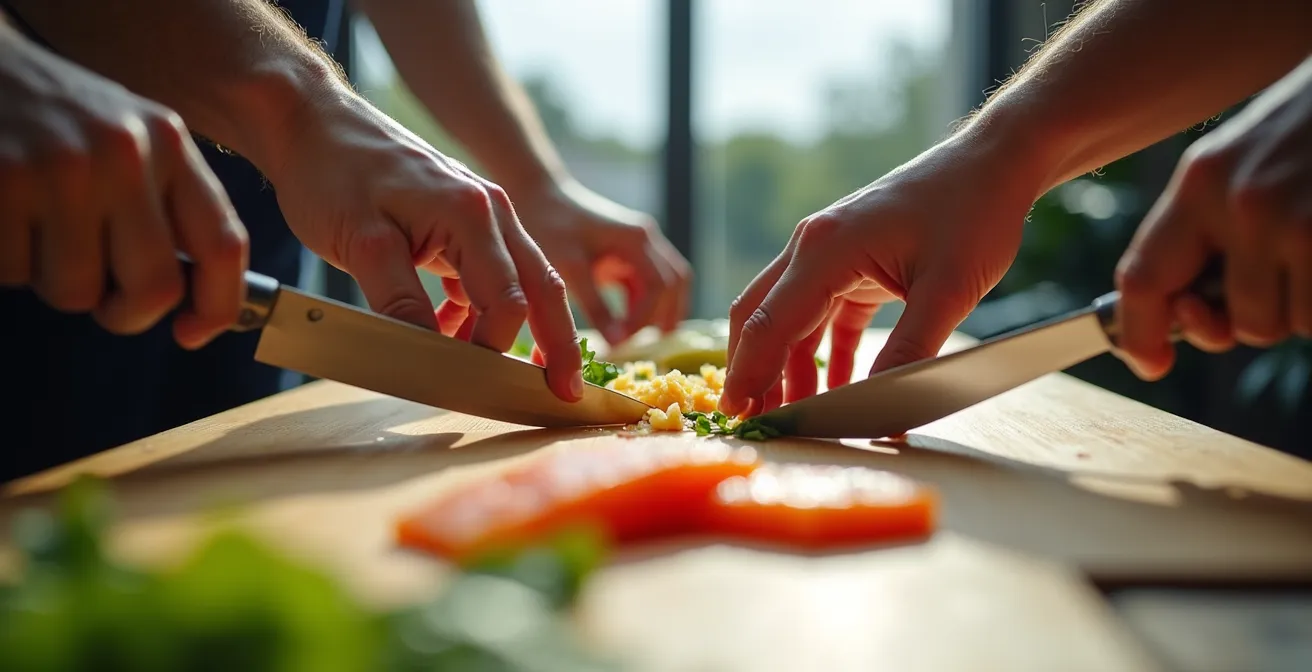
The key is to identify the point of connection first. Do the two cuisines share a key ingredient, a cooking technique, or a philosophical approach to flavor? By starting with this common ground, you ensure the resulting dish is a coherent and exciting new chapter, not a confusing mess. The following table clarifies the difference between these approaches.
| Approach | Method | Result | Example |
|---|---|---|---|
| Random Fusion | Mix unrelated elements | Flavor confusion | Sushi pizza |
| Dialogue Cuisine | Find common language | Meaningful conversation | Nikkei cuisine |
| Technique Gateway | Share cooking method | Natural harmony | Global BBQ combinations |
| Progressive Journey | Course-by-course transition | Narrative arc | Culture A → Dialogue → Culture B |
By architecting a thoughtful dialogue between cuisines, you can create dishes that are not only innovative but also deeply meaningful, telling a story of connection and shared humanity.