Travel
The way we travel is undergoing a profound transformation. What was once measured in passport stamps and photo counts is now being redefined by depth of experience, environmental responsibility, and authentic human connection. Modern travelers increasingly seek journeys that nourish both the soul and the planet—experiences that leave destinations better than they found them while creating memories that transcend the superficial.
This shift reflects a growing awareness that travel is not merely about consumption, but about exchange. From the psychological benefits of slowing down to the tangible impact of choosing regenerative tourism models, today’s travelers face both unprecedented opportunities and critical decisions. Understanding these dimensions—from sustainable hospitality practices to ethical wildlife interactions, from biophilic design principles to strategic logistics planning—empowers you to craft journeys that are as transformative as they are responsible.
Why Meaningful Travel Matters More Than Sightseeing
The traditional checklist approach to travel—racing from landmark to landmark, camera in hand—often leaves travelers exhausted rather than enriched. Research in environmental psychology suggests that deep engagement with fewer experiences creates more lasting memories and greater satisfaction than superficial exposure to many.
The Psychological Benefits of Slow Travel
Slow travel operates on a simple principle: spending more time in fewer places allows for genuine connection. When you remain in a destination for weeks rather than days, something remarkable happens. The initial tourist perspective gradually dissolves, replaced by rhythms and routines that mirror local life. You discover the bakery that opens at dawn, learn which market day offers the freshest produce, and recognize familiar faces in your neighborhood.
This temporal depth triggers what psychologists call “place attachment”—an emotional bond that reduces stress hormones and increases feelings of belonging. Unlike the cortisol spikes associated with rushed itineraries and constant packing, slow travel allows your nervous system to settle into restorative patterns.
Finding Authenticity Beyond Apps
While technology connects us to local guides and experiences, the most authentic encounters often happen off-screen. Consider the difference between booking a “local cooking class” through an app versus striking up a conversation at a family-run restaurant that leads to an impromptu invitation to their kitchen. The former provides a curated experience; the latter offers genuine cultural exchange.
This doesn’t mean rejecting digital tools entirely, but rather using them as starting points rather than endpoints. The goal is to balance structured tours with unplanned wandering, allowing serendipity to play its essential role in memorable travel.
Sustainable and Regenerative Tourism: Beyond Leaving No Trace
Responsible travel has evolved beyond the “leave no trace” philosophy to embrace a more ambitious vision: leaving destinations better than we found them. This regenerative approach transforms tourism from an extractive industry into a force for positive change.
The Economics of Community-Based Tourism
When travelers choose community-owned guesthouses, local guides, and family restaurants, money flows directly into local economies rather than leaking to international corporations. Studies of community-based tourism initiatives demonstrate that this model can retain up to 60-70% of tourism revenue locally, compared to as little as 15-20% with all-inclusive resort packages.
This economic structure creates powerful incentives for environmental conservation. When communities directly benefit from intact ecosystems and preserved cultural traditions, they become fierce protectors of these assets. A fishing village that earns sustainable income from snorkeling tours has tangible motivation to protect its coral reefs from destructive practices.
Understanding Carbon Footprints and Offset Strategies
Long-haul flights represent the most significant environmental cost for many journeys. A round-trip transatlantic flight generates approximately 1.6 tons of CO2 per passenger—roughly equivalent to several months of typical car driving. While this reality shouldn’t halt international travel entirely, it should inform our choices.
Consider these approaches to balance exploration with responsibility:
- Duration trade-offs: If flying far, stay longer to justify the carbon investment
- Strategic routing to minimize connections and total distance
- Choosing direct flights when possible, as takeoffs and landings are most fuel-intensive
- Offsetting through verified programs that fund renewable energy or reforestation projects
- Prioritizing ground transportation once you arrive at your destination
Timing Visits to Support Sustainability
When you travel matters as much as where. Shoulder seasons—the periods just before and after peak tourism—offer a triple benefit: lower environmental stress on ecosystems, better support for year-round local employment, and more authentic experiences without overwhelming crowds. A Mediterranean coastal town in May or September feels fundamentally different than the same destination in August, when infrastructure strains under visitor pressure.
Ethical Considerations: From Wildlife Interactions to Slum Tourism
Not all experiences marketed as “authentic” or “eco-friendly” deserve those labels. Developing ethical discernment requires understanding the hidden impacts of certain tourism activities.
Recognizing Unethical Wildlife Encounters
The desire to connect with wildlife is natural and can support conservation when done responsibly. However, many popular attractions cause significant animal suffering. Red flags include:
- Any opportunity to touch, ride, or take selfies with wild animals
- Facilities where animals perform unnatural behaviors or tricks
- Operations that breed animals in captivity without legitimate conservation programs
- Venues where animals cannot retreat from human interaction
Legitimate wildlife experiences prioritize observation over interaction, maintain respectful distances, limit group sizes, and contribute to conservation science or habitat protection. Think of it as the difference between watching wild dolphins from a boat versus swimming with captive ones in a pool—the former respects natural behavior, while the latter prioritizes human entertainment.
The Complex Ethics of Poverty Tourism
So-called “slum tourism” or poverty tours raise difficult questions about dignity, consent, and voyeurism. While proponents argue these experiences build empathy and direct resources to marginalized communities, critics point out the inherent power imbalance when wealthier outsiders tour impoverished areas as attractions. The ethical line often depends on community agency—whether residents have genuine control over these programs and receive fair compensation, or whether they’re merely subjects of others’ curiosity.
Immersing in Natural Environments: Sensory and Physiological Benefits
Nature immersion offers measurable benefits that extend far beyond aesthetic appreciation. Understanding these mechanisms can deepen your connection to natural surroundings during travel.
The Science of Fractals and Visual Restoration
Natural landscapes—from tree branches to coastlines—exhibit fractal patterns, self-similar structures that repeat at different scales. Research in environmental psychology shows that viewing these patterns reduces physiological stress, lowering heart rate and muscle tension. This happens because our visual cortex processes natural fractals with remarkable efficiency, unlike the harsh geometries of urban environments that require more cognitive effort to interpret.
This explains why a 20-minute forest walk can feel more restorative than hours in a city park. The fractal complexity of forest canopies, fern fronds, and rippling water creates what researchers call “soft fascination”—engagement that captures attention without demanding mental effort.
Balancing Passive Observation with Active Adventure
Both contemplative nature experiences and active adventures offer distinct benefits. Passive observation—sitting beside a mountain stream, watching sunrise from a quiet beach—activates parasympathetic nervous system responses that promote deep relaxation. Active adventures like hiking, kayaking, or climbing engage different pathways, releasing endorphins and building confidence through physical challenge.
The most restorative travel itineraries incorporate both modes, creating rhythm between exertion and rest. Consider this pattern: a morning hike to earn stunning views, followed by an afternoon of sketching, reading, or simply observing the landscape you traversed.
Sustainable Hospitality: Choosing Accommodations Wisely
Where you sleep matters enormously for environmental impact and community benefit. Understanding the operational differences between accommodation types helps you align choices with values.
Certified Eco-Lodges Versus Boutique Hotels
Genuine eco-lodges implement measurable sustainability practices: renewable energy systems, water conservation technologies, waste composting, and biodegradable amenities. Legitimate certification programs verify these claims through third-party audits. In contrast, many boutique hotels engage in “greenwashing”—marketing themselves as eco-friendly while making only superficial changes like offering guests the option to reuse towels.
Look for specific evidence rather than vague claims. Does the property publish actual data on water usage, energy sources, and waste diversion rates? Do they employ local staff at fair wages? Do they source food from nearby farms? These concrete practices matter more than aesthetic elements like bamboo furniture, which may actually present maintenance challenges and durability issues.
Understanding Hidden Resource Consumption
Daily laundry services in hotels consume extraordinary amounts of water and energy—a single load can use 15-40 gallons of water. When you decline daily sheet changes or reuse towels, you’re not just making a symbolic gesture; you’re preventing hundreds of gallons of water consumption during a week-long stay. Similarly, choosing accommodations that compost food waste rather than sending it to landfills prevents methane emissions while creating soil amendments for gardens.
Redefining Luxury Through Design and Experience
Contemporary luxury travel increasingly emphasizes privacy, space, and personalized service over ostentatious displays or all-inclusive buffets. This shift aligns with both wellness priorities and sustainability principles.
The Value of Staff-to-Guest Ratios
High-end properties distinguish themselves through exceptional staff-to-guest ratios—sometimes approaching 1:1 at the most exclusive establishments. This enables anticipatory service, where staff recognize preferences without being asked. More importantly, it typically indicates fair labor practices with manageable workloads, rather than expecting a few employees to serve many guests.
Biophilic Design Principles
Accommodations that integrate natural materials and living elements enhance wellbeing through biophilic design. The psychological impact of wood versus concrete surfaces is measurable: wood interiors correlate with lower blood pressure and reduced stress markers. Green roofs provide insulation while supporting biodiversity. Vernacular architectural styles that respond to local climate through traditional design wisdom often outperform energy-intensive modernist approaches requiring constant air conditioning.
The best properties feel inseparable from their landscapes—optimizing building orientation for passive solar gain, using natural ventilation, and framing views that connect interior spaces with surrounding ecosystems.
Mastering Travel Logistics for Flow and Reduced Stress
Even the most thoughtfully chosen destinations and accommodations can be undermined by poor logistics. Strategic planning creates the foundation for present-moment awareness during your journey.
The Hub and Spoke Strategy
Rather than constantly packing and changing locations, the hub and spoke approach establishes a base for several days or weeks, from which you take day trips. This dramatically reduces logistical friction—you unpack once, learn the neighborhood, establish routines, and eliminate the cognitive load of constant orientation to new spaces. Think of it as the difference between permanent residence and hotel hopping; the former allows you to actually inhabit a place rather than merely passing through.
Calculating Realistic Transit Times
One of the most common planning mistakes is underestimating transportation time. That “three-hour” bus ride becomes five hours when you account for departure delays, border crossings, or mountain roads. Build generous buffers into itineraries, viewing transit time not as wasted hours but as opportunities for observation, conversation, or rest. Over-scheduling attractions creates the antithesis of meaningful travel—a self-imposed race that prevents the very experiences you sought.
Balancing DIY Planning with Professional Expertise
The optimal approach often combines independent research with selective use of professional expertise. You might design the overall itinerary yourself while hiring local guides for complex activities like multi-day treks or cultural experiences requiring translation and context. This hybrid model preserves agency and flexibility while accessing specialized knowledge exactly where it adds the most value.
Travel has the potential to be among life’s most transformative experiences—expanding perspective, building empathy, and creating lasting memories. By prioritizing depth over breadth, sustainability over extraction, and authentic connection over manufactured experiences, you transform journeys from consumption into genuine exchange. The choices you make—from how long you stay to which accommodations you support, from the wildlife encounters you seek to the pace you maintain—ripple outward, affecting not just your own experience but the communities and ecosystems you visit. Thoughtful travel, ultimately, is an act of both self-care and global citizenship.

How to Plan a Multi-Stop Itinerary That Avoids Traveler’s Burnout?
The secret to a burnout-free multi-stop trip is to stop planning like a tourist and start thinking like a travel logistician. Treat your home base as a “psychological anchor” to reduce cognitive load, not just a place to sleep. Calculate…
Read more
How to Design a Hotel That Cools Itself Naturally Without Air Conditioning?
Designing a self-cooling hotel is not about adding eco-features; it’s about conceiving the building as a living organism that regulates its own temperature. Materials like mass timber are not just structural; they actively improve guest well-being by lowering stress indicators….
Read more
How to Select a Luxury Resort That Offers True Privacy and Not Just Gold Taps
True resort privacy is not a feature you buy from a brochure; it is a systemic outcome you verify through operational intelligence. Architectural analysis and villa placement are more critical than a “secluded” location. A resort’s business model (pay-per-service vs….
Read more
How to Implement Zero-Waste Practices in Hospitality Without Sacrificing Luxury?
True sustainability in luxury hospitality is not about sacrifice, but about smart operational design that enhances guest experience and increases profitability. Focus on guest-centric communication and high-quality alternatives to make eco-choices feel like a genuine upgrade. Prioritize investments with a…
Read more
How to Achieve Deep Nature Connection Without Venturing into the Wilderness
In summary: Deep nature connection is not about location (wilderness) but about the quality of your attention and sensory engagement. Simple, science-backed practices like observing natural fractals can reduce stress by up to 60%. You can reset your internal clock…
Read more
Beyond Sustainability: How to Pivot to Regenerative Tourism That Truly Heals Local Communities
Shifting from sustainable to regenerative tourism means moving from a passive ‘do no harm’ approach to an active role in co-creating thriving, resilient communities. This involves auditing where your money goes to prevent economic leakage and prioritizing deep, value-exchange experiences…
Read more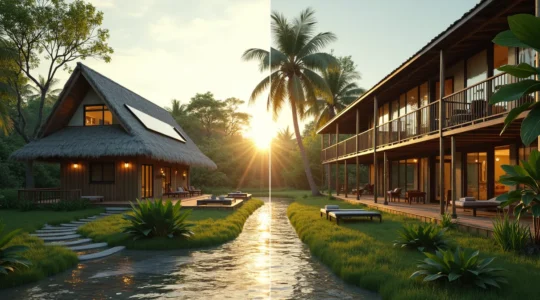
How to Identify Truly Eco-Friendly Lodges Without Falling for Greenwashing?
True sustainable travel requires shifting from being a passive guest to an active, discerning auditor of sustainability claims. Verify impact by asking specific, evidence-based questions about community contributions and local employment, not by accepting vague marketing slogans. Understand that not…
Read more
How to Plan a Travel Itinerary That Prioritizes Connection Over Checklists?
The secret to a transformative journey isn’t visiting more places, but engaging more deeply with one. Swap the “5 cities in 5 days” race for a deep dive into a single location’s rhythm. Design your trip around a “personal project”…
Read more